

Overview
Cardboard reuse has become an increasingly important part of developing sustainable packaging solutions. As environmental awareness grows and demands for reduced greenhouse gas emissions tighten, companies and consumers are looking for innovative ways to minimize their climate impact. Cardboard, already an environmentally friendly material, gets an extended life through reuse. This means that cardboard is used multiple times as packaging filler instead of being directly recycled or discarded.
This process is particularly relevant in the packaging industry where product protection during transport is necessary, but can also lead to significant environmental impact if the wrong materials are used. By choosing reused cardboard as packaging filler, companies can both reduce their costs and contribute to a sustainable future.
WELL-CHIPs from ReppaP® are an example of such an innovative product that combines reused cardboard with social responsibility. WELL-CHIPs are made from repurposed cardboard that protects products while keeping the CO₂ footprint low. This type of sustainable packaging is not only an environmentally smart choice but also a solution that strengthens the company's CSR profile.
"Fill your packages – not your CO₂ account." – A slogan that emphasizes the importance of choosing environmentally friendly and economical packaging options.
In summary, cardboard reuse is a practical and effective method for reducing waste and environmental impact in the packaging industry. It is part of a larger movement towards a circular economy where resources are used optimally and sustainably.
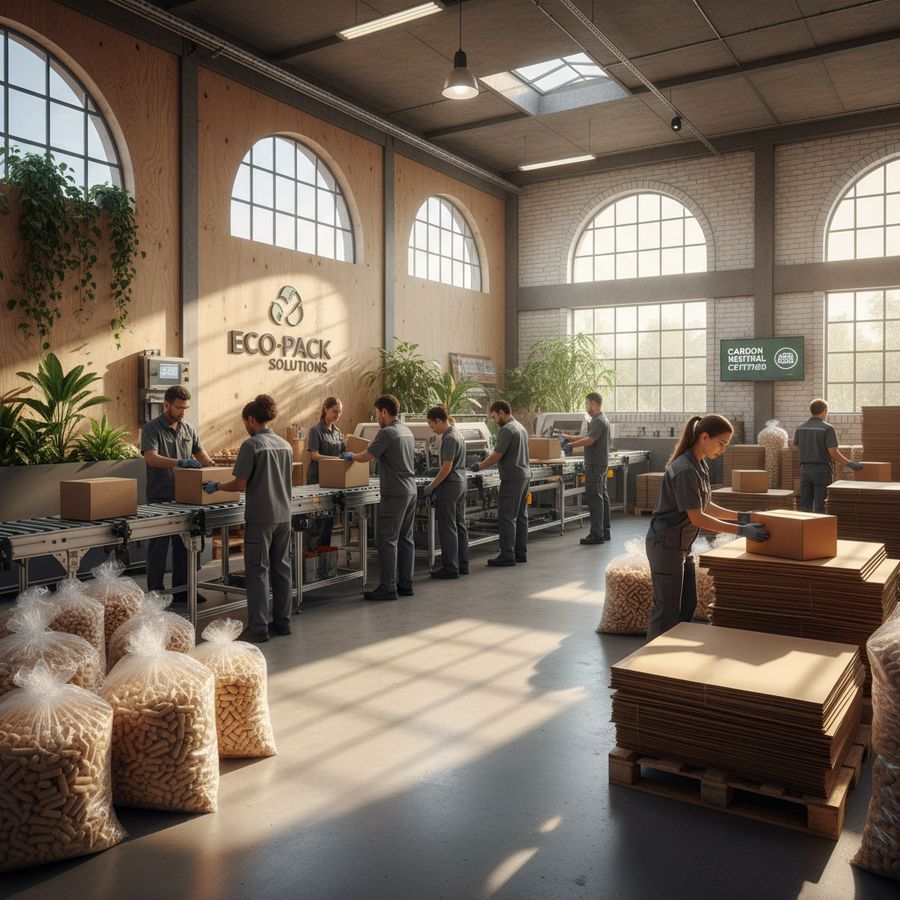
What does cardboard reuse mean?
Cardboard reuse means that cardboard material that has already been used in a previous process is given a new life as packaging filler or a similar product. Instead of the cardboard being directly shredded for recycling or discarded, it is processed in its existing state and transformed into a protective filling material. This extends the cardboard's life cycle and reduces the need for new production.
An important aspect of this process is that the cardboard does not need to undergo extensive chemical or mechanical treatment, which makes reuse both energy-efficient and environmentally friendly. WELL-CHIPs from ReppaP®, for example, are made from used cardboard material that is repurposed in its existing state, making production almost entirely CO₂-neutral.
The method is particularly suitable for packaging filler where the cardboard's natural properties, such as shock absorption and flexibility, are utilized to protect fragile goods during transport. It is also an advantage that the product, after use, can be easily sorted and recycled as cardboard, which simplifies things for the end consumer and strengthens the circular flow.
-
Cardboard gets an extended life through several use cycles
-
Reduced energy consumption compared to new production
-
Easy recycling after use
-
Preserves the material's shock-absorbing properties
-
Contributes to reduced waste and CO₂ emissions
Cardboard reuse is thus more than just an environmental trend – it is a sustainable business model that combines economy, environment, and social responsibility. This makes it an attractive choice for companies that want to reduce their climate impact and at the same time offer their customers a secure and sustainable packaging solution.
Environmental and economic benefits
Choosing cardboard reuse as packaging filler brings significant environmental and economic benefits. Environmentally, it helps reduce the amount of waste ending up in recycling systems or landfills, while also reducing total energy consumption and greenhouse gas emissions. Since the cardboard does not need to be broken down and re-processed, resources and energy are saved.
According to studies, the use of repurposed cardboard as packaging filler can reduce the CO₂ footprint by up to 30% compared to plastic-based filler materials. This is a significant difference that allows companies to take active environmental responsibility while meeting increasingly stringent demands from both authorities and consumers.
Economically, reused cardboard can also be a smart choice. Since the material is based on existing cardboard, raw material costs are reduced. Furthermore, production is often local, which shortens transport routes and minimizes logistics costs. ReppaP® also offers a price guarantee for large purchases, making it economically advantageous for larger companies.
"With ReppaP®, we save both money and CO₂ – and customers love it." – Warehouse Manager, E-commerce
In addition to direct cost savings, cardboard reuse helps strengthen a company's sustainability profile, which can provide competitive advantages and increased customer loyalty. Many consumers value companies that take environmental responsibility and choose products with a low environmental footprint.
-
Reduced environmental impact and lower CO₂ emissions
-
Reduced raw material costs
-
Local production with short transport distances
-
Strengthened brand through sustainability efforts
-
Price guarantee and stable deliveries for major customers
In summary, cardboard reuse is a profitable investment for both the environment and the company's economy. It is a solution that makes it possible to combine sustainability with efficiency and good economics.
How well-chips are manufactured
WELL-CHIPs are an innovative product manufactured through a gentle and environmentally friendly process where used cardboard material is repurposed in its existing state. Production takes place in Sweden, which minimizes the climate impact of transport and supports local production. The process is designed to be as energy-efficient as possible and to completely avoid CO₂ additions during production.
The used cardboard material is collected from various delivery processes where it would otherwise have become waste. Instead of going to paper recycling, it goes directly to the manufacturing of WELL-CHIPs. The cardboard is mechanically processed to form small, shock-absorbing chips that fill packaging and protect goods during transport.
The advantages of this manufacturing method are many. Since the cardboard is not shredded or chemically treated, its fiber quality and strength are preserved. This makes WELL-CHIPs a strong and reliable filling material that is also gentle on the environment.
-
Collection of used cardboard material
-
Gentle mechanical processing into packaging chips
-
Production with almost zero CO₂ emissions
-
Manufacturing in Sweden with short transport routes
-
100% recyclable and biodegradable products
WELL-CHIPs represent a sustainable packaging filler that both protects products and minimizes environmental impact. By choosing this product, companies contribute to a circular economy where resources are used multiple times and waste is minimized.
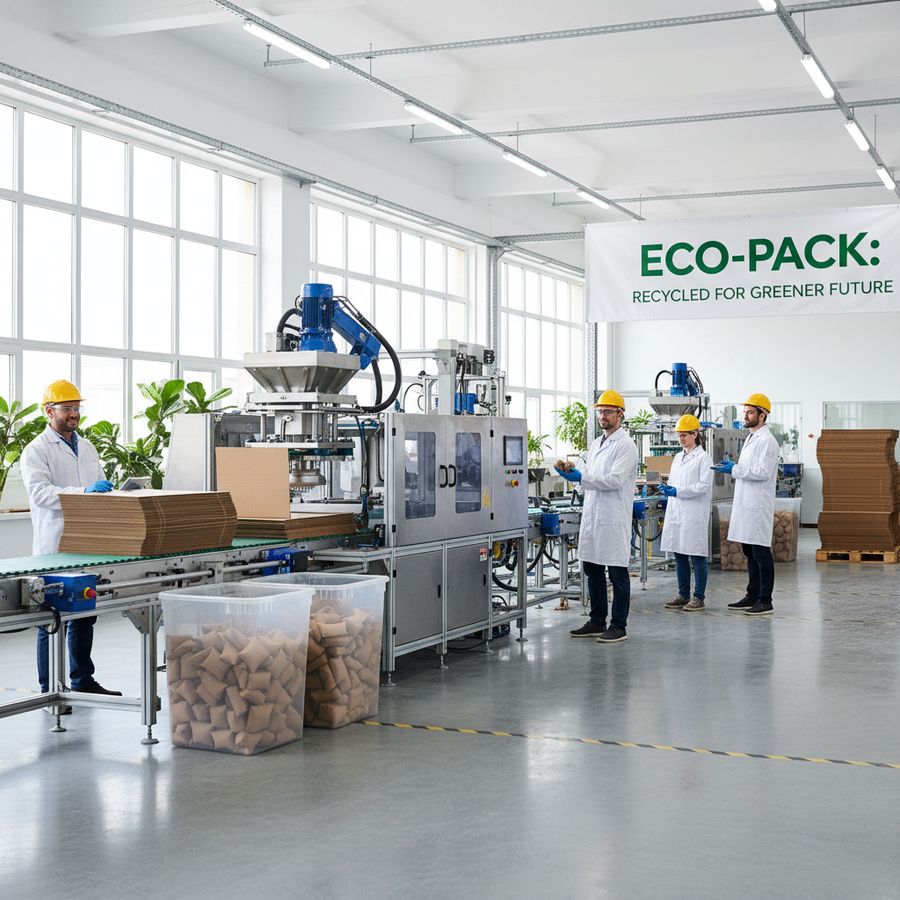
Comparison with traditional recycling
Traditional cardboard recycling involves collecting, shredding, and processing the used material into new paper products. This process requires energy and resources to break down and transform the material, which in turn leads to CO₂ emissions and other environmental effects. In contrast, cardboard reuse involves repurposing the material in its existing state without extensive treatment.
One of the biggest advantages of reuse is that it extends the cardboard's life cycle without requiring new production. This means significant energy savings and reduced emissions, as the manufacturing and transport of new material decrease. WELL-CHIPs serve as an example where reused cardboard can replace both newly produced cardboard products and plastic-based filling materials.
"WELL-CHIPs have almost zero CO₂ emissions in their extended life cycle, which distinguishes them from traditional recycling."
From a practical perspective, reused cardboard is often more flexible and easier to handle for packaging filler. It requires no advanced sorting or chemical treatment, which simplifies logistics and reduces costs.
-
Reuse requires less energy than recycling
-
Reduced greenhouse gas emissions
-
Extends the material's life cycle and reduces waste volumes
-
Gentler on the environment during production and transport
-
Easy handling and sorting for the end consumer
By choosing reused cardboard as packaging filler, companies can contribute to a more circular and sustainable economy, where resources are used efficiently and environmental impact is minimized.
Impact on CO₂ footprint
One of the most tangible benefits of cardboard reuse is its positive effect on the CO₂ footprint. Since the cardboard is repurposed in its existing state, the energy-intensive process of breaking down and manufacturing new material is avoided. This leads to a drastic reduction in greenhouse gas emissions linked to production and transport.
WELL-CHIPs from ReppaP® are a clear example of how reused cardboard can contribute to a lower climate impact. The production of WELL-CHIPs has a CO₂ addition of nearly zero, and compared to traditional plastic filler materials, CO₂ emissions can be reduced by up to 30%. This is important in a situation where companies and consumers demand sustainable alternatives that can contribute to climate goals.
"Fill your packages – not your CO₂ account" – a powerful reminder that every choice of packaging material affects our planet.
By integrating reused cardboard into their packaging solutions, companies can significantly reduce their total CO₂ footprint, improve their environmental profile, and meet both national and global sustainability requirements. Additionally, the short transport route for production in Sweden further minimizes emissions.
- Nearly zero CO₂ addition during the production of reused cardboard
- Up to 30% lower CO₂ emissions compared to plastic filling
- Contributes to the company's overall climate goals and ESG reporting
- Shorter transports due to local production
- Easy recycling and circular use reduce environmental impact
Choosing reused cardboard as packaging filler is therefore an effective way to reduce climate impact without compromising functionality or cost-effectiveness.
Conclusion
Cardboard reuse is a sustainable and smart packaging solution that both protects products and reduces environmental impact. By extending the cardboard's life cycle and using it as packaging filler, like WELL-CHIPs from ReppaP®, companies can significantly reduce their CO₂ footprint and simultaneously promote a circular economy.
The environmental and economic benefits are clear: reduced emissions, lower costs, local production, and strong social responsibility. By choosing reused cardboard, companies contribute not only to a greener future but also to a more inclusive society where people with different backgrounds get meaningful work. Explore more about this important topic here.
"It's business value with heart."
With increasing demands for sustainability and transparency, it is becoming increasingly important to implement packaging solutions that are both environmentally friendly and economically sustainable. Reused cardboard is a solution that combines these aspects and creates value for both companies and customers.
Finally, it is an investment in the future – for the planet, for people, and for business. Choosing sustainable packaging like reused cardboard is a step towards a more responsible and climate-friendly packaging strategy.
0 comments