

Overview
Sustainability is a central issue in all industries today, not least when it comes to packaging. As both companies and consumers become more aware of the environmental impact of their choices, interest in environmentally friendly alternatives such as reused cardboard and recycling is increasing. But what is truly best for the environment – reusing cardboard or recycling it?
This article goes through the differences between reuse and recycling, as well as the advantages and challenges of each method. We also look at energy consumption and climate impact at different stages of the processes and provide concrete examples of how reused cardboard can be used in practice, especially in packing processes. In addition, we highlight how companies can communicate their sustainability efforts to customers in a credible and engaging way.
By understanding both technical and environmental aspects, you as a company can make well-founded decisions for more sustainable packaging management. Regardless of whether you are active in e-commerce, retail, or production, the choice between reuse and recycling is an important part of reducing your climate impact.
"Choosing the right packaging material and handling method is not only good for the environment – it also strengthens the brand's sustainability profile and creates business value with heart."
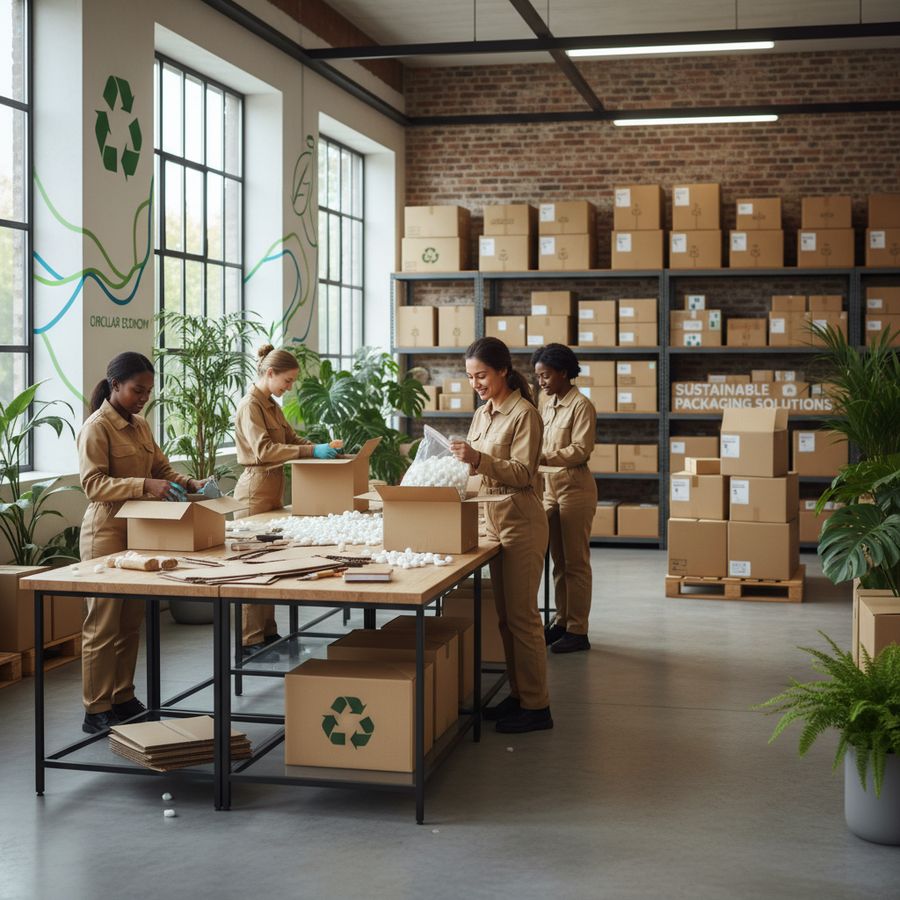
The difference between reuse and recycling
Reuse and recycling are two important components of a circular economy, but they differ significantly in method and impact. Reuse means that a product or material is used again in its original form, without undergoing an extensive processing process. For example, cardboard that has already been used can be formed into new packing fillers without first being ground down or chemically treated. This preserves the material's quality and requires minimal energy input.
Recycling, on the other hand, means that the material is broken down and converted into raw material for new products. In cardboard recycling, the cardboard is ground down into fibers that are then reused to produce new paper or cardboard. This process requires energy to break down, clean, and rebuild the material, which generates a certain climate impact.
Another difference is that reuse can often happen locally and quickly, while recycling can involve longer transports and more steps in production. This affects both cost and environmental impact. Reused cardboard, such as WELL-CHIP's, can for example be produced with almost zero CO₂ emissions in production, as the material is already available and does not need to undergo extensive processing.
-
Reuse: Material is used again in its existing condition, minimal processing.
-
Recycling: Material is broken down and converted into new raw material, energy-intensive process.
-
Environmental impact: Reuse often results in a lower climate impact than recycling.
-
Quality: Reuse preserves the material's original properties better.
"Reuse is a smart way to give cardboard an extended life with minimal environmental impact, while recycling is an important solution when the material's life cycle is over."
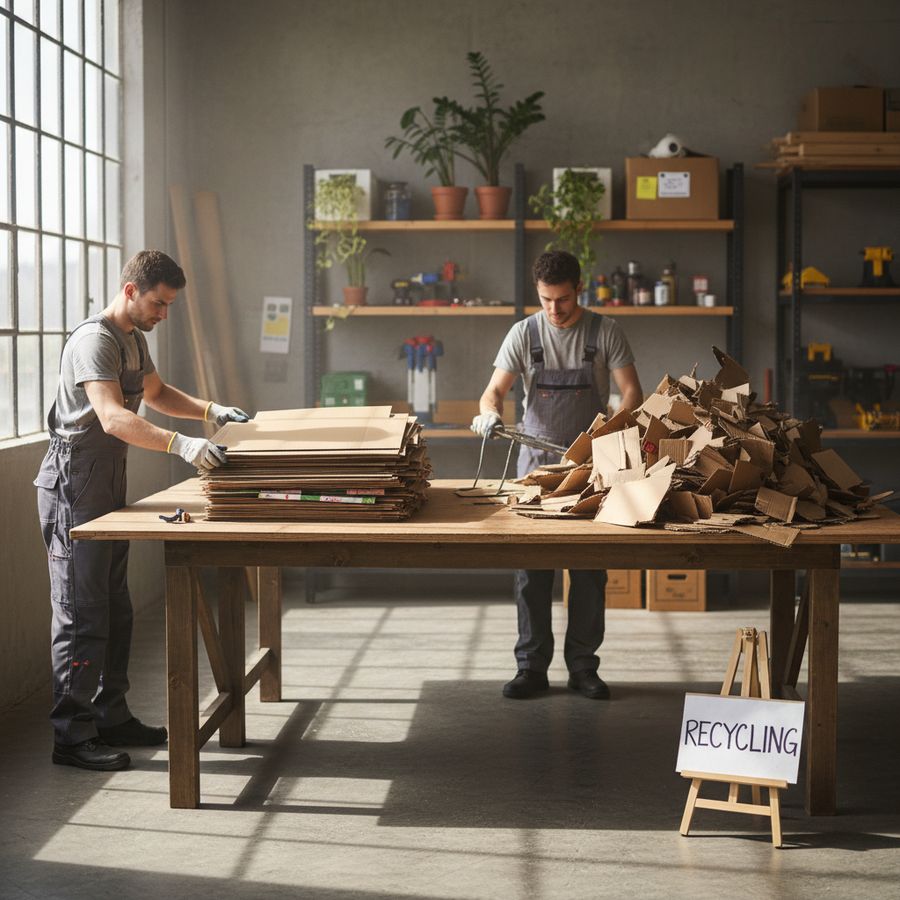
Energy and processes behind cardboard recycling
Cardboard recycling is an established method for reducing waste and saving natural resources, but it is not entirely without climate impact. The process starts with the collection and transport of used cardboard to recycling facilities. Here, the material is sorted and cleaned before being ground into pulp.
This pulp is treated to remove impurities and mixed with water to create a slurry that can be pressed and dried into new cardboard products. Each step in this chain requires energy, mainly electricity and heat, which leads to greenhouse gas emissions.
Research shows that recycling cardboard can save significant amounts of trees and water compared to producing new material from virgin fiber, but the total energy consumption is still higher than for reuse. In addition, the quality of the fiber can deteriorate after several recycling cycles, which limits how many times the cardboard can be recycled.
-
Collection and transport require fuel and logistics.
-
Sorting and cleaning require water and energy.
-
Grinding and reshaping are energy-intensive steps.
-
Fiber quality decreases after repeated recycling processes.
It is therefore important to balance recycling with other sustainable solutions such as reuse, to maximize environmental benefits and reduce climate impact.
"Even if recycling is a better alternative than throwing cardboard in waste, the energy-intensive steps in the process are important to understand in order to optimize sustainability work."
Why reuse can lead to lower climate impact
Reuse of cardboard, such as that used in WELL-CHIPs, is an excellent example of how to drastically reduce climate impact. Since the material is used in its existing condition, without being ground down or chemically reshaped, large amounts of energy are saved that would otherwise be used in the recycling process.
Furthermore, production often takes place close to customers, which reduces the need for transport and thus further emissions. Using reused cardboard also helps to reduce waste volumes and minimizes the need for virgin raw materials, which saves forests and natural resources.
Another important aspect is that reuse promotes a circular economy where the material gets more life cycles, which is crucial for achieving climate goals. WELL-CHIP's filling material is a concrete example of this – here, cardboard waste from other delivery processes is reused, making the CO₂ footprint in the production phase almost zero.
-
Minimal energy consumption during production.
-
Reduced transports thanks to local manufacturing.
-
Reduction of waste and increased material efficiency.
-
Extended life cycle of the cardboard material.
Therefore, reuse is often the most environmentally friendly choice when it comes to packaging materials. At the same time, it gives companies the opportunity to communicate sustainability credibly, which strengthens the brand and creates trust among customers.
"Reuse is a win-win solution that combines lower climate impact with business benefits and social inclusion."
When recycling is still the right path
Despite all the advantages of reuse, there are situations where recycling is the best or only option. When cardboard has become too worn, dirty, or damaged to be reused, the material must be recycled to avoid incineration or landfill.
Recycling is also necessary when the material has reached the end of its life cycle and can no longer be used in its existing condition. It creates an opportunity to break down and convert the fibers into new products, which reduces the need for virgin raw materials.
It is therefore important to have well-functioning collection and sorting to ensure that the cardboard goes to the correct treatment. Sometimes a combination of reuse and recycling can be the most sustainable solution, where material is first reused as much as possible and then recycled when it can no longer be used again.
-
Material that is too damaged for reuse must be recycled.
-
Recycling extends the material's total life cycle.
-
Sorting and collection are crucial for efficient management.
-
Combination of reuse and recycling maximizes sustainability.
Understanding when recycling is the right path contributes to more efficient and environmentally friendly packaging management.
"It's about using every step of the material's life cycle in the best possible way – from reuse to recycling."
Practical examples in the packing process
Integrating reused cardboard into the packing process is both simple and efficient, something many companies have already discovered with products like WELL-CHIPs. Instead of using newly produced filling material, cardboard material that has already been used can be chosen, thereby extending its life cycle.
WELL-CHIPs are made from reused cardboard from waste in other delivery processes and are used as protective filling material in packages. The product is strong and shock-absorbing, which protects goods during transport without compromising the environment.
Another advantage is that after use, the material can be thrown directly into corrugated cardboard recycling, which simplifies sorting for the end customer and contributes to a better recycling rate. Several companies have reported that customers appreciate this clear sustainability measure and that it strengthens their brand.
-
Use of reused cardboard as packing filler.
-
Protective and durable material with low climate impact.
-
Easy handling and sorting for the end customer.
-
Strengthens the sustainability profile in the supply chain.
By choosing reused cardboard in the packing process, companies can both reduce costs and contribute to a greener future.
"Switching to reused cardboard in packaging is a concrete step towards more sustainable packaging – with both environmental and business benefits."
How to communicate sustainability to customers
Communicating sustainability in a credible and engaging way is crucial for building customer relationships and strengthening the brand. When you use reused cardboard like WELL-CHIPs, you can highlight both environmental benefits and social aspects in your communication.
Explain how packaging material is reused instead of being newly produced, and how this drastically reduces climate impact. Also highlight social responsibility, for example, that production provides work for people far from the labor market, which shows that sustainability is about both environment and people.
Be transparent with information about the material's origin, manufacturing process, and what happens to it after use. Feel free to use visual elements and clear messages to make it easy for customers to understand and appreciate the initiatives.
-
Focus on concrete environmental benefits and climate impact.
-
Talk about social and societal benefits.
-
Be transparent and clear about the material's life cycle.
-
Use visual and easy-to-understand messages.
By communicating sustainability in the right way, you create trust and differentiate your company in the market.
"Sustainability communication is an important part of the business strategy – it's about showing that your company takes responsibility for the future."
Conclusion
In summary, both reuse and recycling are important aspects of sustainable packaging management, but reused cardboard often offers the most climate-friendly solution. By reusing cardboard in its existing condition, as WELL-CHIP does, for example, companies can significantly reduce energy consumption and transport, which in turn reduces climate impact. For more information, visit Reppap.
Recycling is still necessary when the material can no longer be reused, but should be seen as a second line in the materials' life cycle. The combination of smart reuse and efficient recycling is the optimal path towards a circular economy.
Companies that choose reused cardboard not only gain environmental benefits but can also strengthen their sustainability profile and contribute to social inclusion. With the right communication to customers, sustainability becomes a competitive advantage and a part of the company's values.
"Choosing reused cardboard over newly produced material is a powerful step towards a more sustainable future – for the environment, society, and business."
0 comments