

Overview
Creating a smart packing station is an investment that yields significant benefits, both economically and environmentally. By retaining cardboard and reusing it as filling material, companies can reduce their costs for purchasing void fill while contributing to a circular economy. A well-planned packing station optimizes workflows, reduces waste, and saves staff time.
With innovative machines that convert used corrugated cardboard into various types of protective materials, such as WELL-CHIPs, WELL-STRIPS, and WELL-NET, the packing table can become an efficient and sustainable workplace. This method also results in reduced climate impact, as reused corrugated cardboard has virtually zero CO₂ impact during its lifecycle.
"A smart packing station enables both cost savings and more sustainable packaging management."
This guide covers important steps on how to plan and build an efficient packing station for reusing corrugated cardboard as void fill, including collection, sorting, flow optimization, and storage for peak season.
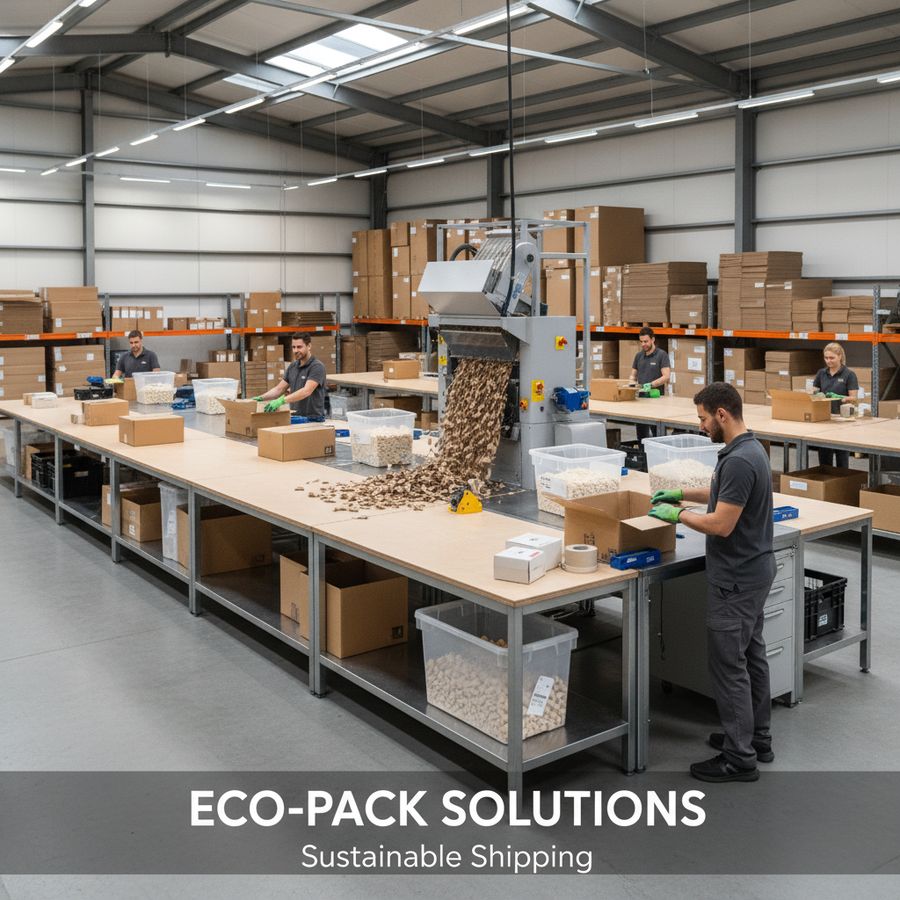
Planning a packing station for boxes without returns
Planning is key to a successful smart packing station when boxes are not returned from customers. The first step is to analyze the quantity of incoming corrugated cardboard and its dimensions to adapt the packing station's size and layout.
Strategically place the packing table to easily handle and convert cardboard into void fill without unnecessary movements. Consider ergonomics to reduce strain on staff and optimize the packing station's flow.
Effective planning also includes space for machines like cardboard shredders, where corrugated cardboard can be quickly processed into sustainable void fill. Ensure there are clear areas for sorting and temporary storage of both cardboard and material.
"With proper planning, you can maximize the utilization of your cardboard and create a smooth workflow."
Collection and sorting of incoming corrugated cardboard
A well-functioning packing station requires an efficient system for collecting and sorting incoming corrugated cardboard. Cardboard should be collected directly at the receiving area to minimize unnecessary transport within the premises.
Sorting is crucial to ensure that the cardboard is clean and free from contaminants before processing. Separating tape, labels, and other impurities facilitates the production of quality void fill that can be used directly at the packing table.
Implement clear guidelines and training for staff so that sorting becomes a natural part of the work routine. Use marked bins or containers to facilitate the separation of different types of packaging.
-
Collect cardboard near the receiving area
-
Remove contaminants
-
Use clearly marked containers for sorting
-
Train staff on handling procedures
Creating void fill near the packing table
To maximize efficiency, it is important to have machines for producing void fill placed near the packing table. This reduces unnecessary lifting and transport distances, saving time and reducing the risk of work-related injuries.
Machines such as cardboard shredders can convert corrugated cardboard into three different types of void fill: WELL-CHIPs, WELL-STRIPS, and WELL-NET. This provides flexibility to adapt the shape of the void fill to the needs of the products and the design of the packaging.
By producing void fill directly at the packing station, you can also eliminate costs for purchasing external material and simultaneously reduce waste. This is a practical and environmentally friendly solution for sustainable packing.
"Creating void fill near the packing table increases productivity and reduces costs."
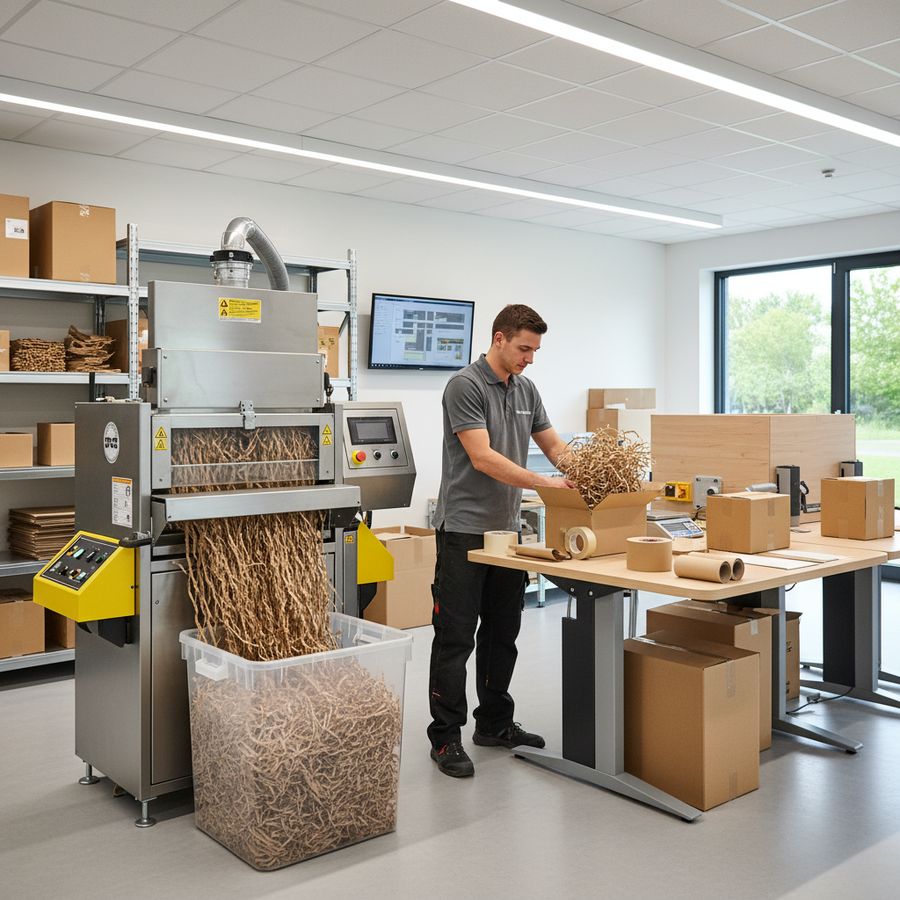
Flow that reduces waiting times and unnecessary lifting
A well-planned workflow at the packing station is crucial to minimize waiting times and unnecessary lifting. By designing the flow so that boxes, void fill, and packed goods move in a logical sequence, you can increase capacity and reduce staff workload.
Optimize the placement of cardboard collection, machines, and packing tables so that each step naturally follows the next. It is also important to have enough space to avoid congestion and allow for smooth movements.
Implement visual aids such as floor markings and clear signs to facilitate the flow. Also, consider integrating ergonomic aids such as height-adjustable tables to improve the working environment.
-
Logical workflow from collection to packing
-
Minimize transport distances within the station
-
Ergonomic solutions to reduce strain
-
Visual aids for efficient flow
Storage of void fill and cardboard for peak season
Ahead of peak season, it is important to have a well-thought-out plan for storing void fill and cardboard. By preparing and storing the right amount of material, you can avoid bottlenecks and ensure that packing can continue without interruption.
The storage space should be easily accessible and organized to quickly supply the packing station with material when needed. Use robust shelving systems and clear labeling to maintain order and efficiency.
It can also be advantageous to scale up the production of void fill before peak season to have a stock ready. This way, you avoid rushed work routines and can handle increased volumes smoothly.
"Good storage planning for peak season ensures a stable and efficient packing flow."
Recycling routines after customer use
An important part of circular and sustainable management is to create clear recycling routines after the cardboard and void fill have been used by the customer. Since corrugated cardboard is recyclable with minimal CO₂ impact, it should be easily returned to the material flow.
Inform customers on how they can best recycle the void fill and cardboard. Providing instructions or communication materials explaining this can increase recycling rates and strengthen the company's environmental profile.
Internal routines should also include the collection and recycling of any returned material within the company's own operations. This creates a sustainable chain from packing to recycling.
-
Communicate recycling information to customers
-
Offer simple and clear instructions
-
Implement internal recycling routines
-
Focus on circular economy and sustainability
Conclusion
Building a smart packing station focused on retaining cardboard and reusing it as void fill is an investment that yields both economic and environmental benefits. Through careful planning, efficient collection, sorting, and production of void fill near the packing table, you can optimize workflows and reduce costs. To learn more about how you can improve your packing station, visit Reppap.
Such a solution contributes to creating circular packaging management with minimal climate impact. With proper storage routines and clear guidelines for customer recycling, you ensure a sustainable and profitable business.
"Smart packing is not only good for business but also for the environment and the future."
By implementing these strategies, you can take your packaging efforts to the next level while strengthening your environmental responsibility.
0 comments