

Overview
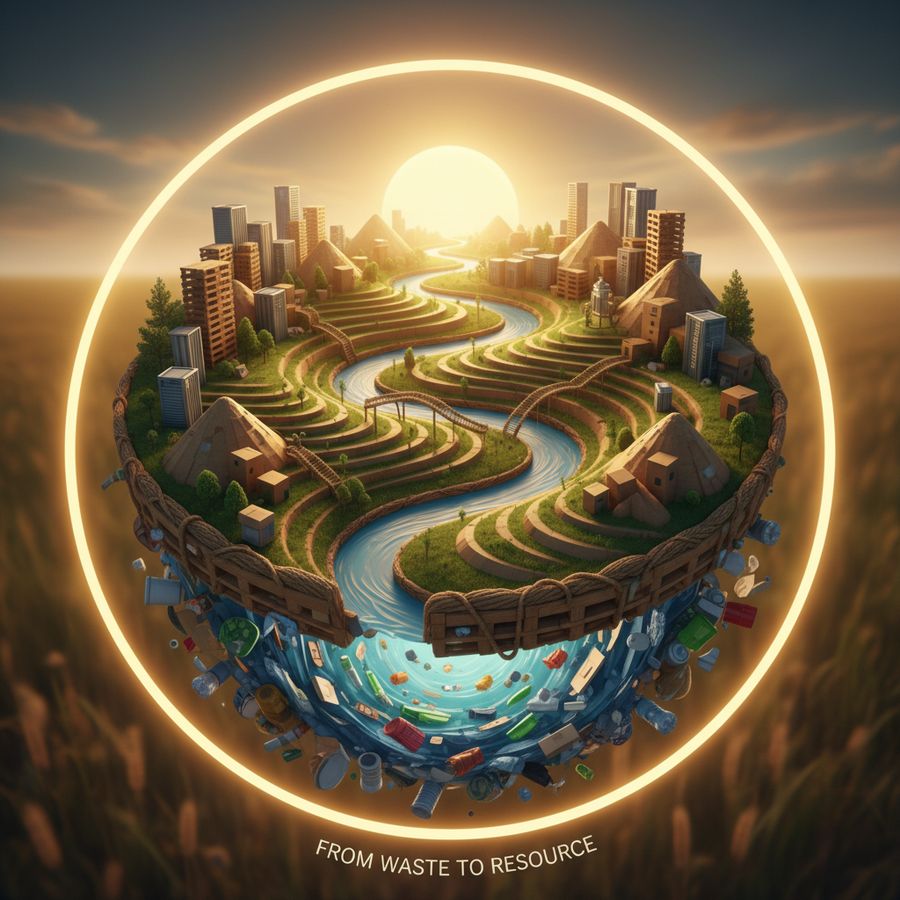
Circular packaging is about moving from a linear approach, where materials are used and discarded, to a system where resources are kept in circulation for as long as possible. For industry, this means packaging is no longer seen as waste, but as a valuable asset. This applies particularly to cardboard, plastic, and polystyrene, which often occur in large volumes in logistics, production, and deliveries.
In a circular economy, the focus shifts to reducing the purchase of new filling material, increasing reuse, and improving recycling. When used corrugated cardboard can be transformed into new shock-absorbing material directly on-site, both economic and environmental benefits are created. At the same time, the need for external transport and waste management decreases.
Waste is not the end of one process, but the beginning of the next use
For companies working with sustainability issues and CSR, circular packaging is therefore more than a practical solution. It is a concrete way to reduce costs, decrease climate impact, and strengthen the brand. With the right processes, machinery, and goals, packaging flows can become a natural part of the company's sustainability work. The result is smarter packing, better resource utilization, and a clearer step towards a more sustainable industry.
What circular packaging means for industry
For industry, circular packaging means that the entire lifecycle of packaging needs to be planned more strategically. It's not enough to simply sort waste correctly. Companies also need to review how packaging is received, used internally, reused within the business, and finally sent for recycling when it can no longer be reused.
In practice, it often involves transforming existing waste streams into new resources. For example, a used corrugated cardboard box can become new protective material for deliveries. Plastic bottles, containers, and styrofoam can be processed to take up significantly less space during storage and removal. This makes waste easier to handle and cheaper to transport.
The benefits for industry are several:
-
lower costs for purchasing new packaging materials
-
reduced waste volumes and more efficient internal flows
-
stronger link between operational activities and CSR
-
better conditions for achieving environmental goals
Circular economy in packaging flows also means increased resilience. When companies can use their own materials more efficiently, their dependence on external supply chains decreases. This makes the packaging issue a business strategy issue, not just an environmental one. For many businesses, this is a concrete first step towards more sustainable production and logistics.
Designing for reuse and easy recycling
To succeed with circular packaging, the design must support both reuse and recycling. Packaging that is difficult to separate, contains unnecessary material combinations, or quickly breaks loses much of its circular value. Therefore, companies should consider, already in the design phase, how the material will be used, reused, and managed afterwards.
Smart packaging is robust enough to be used effectively, but also easy to sort. Cardboard with clear material purity is often easier to recycle than complex constructions with multiple composite layers. Similarly, plastic flows become more valuable when different types of plastic are kept separate and clean from contaminants.
The most sustainable packaging is often that which can be used again or recycled without extra complexity
Some key design principles are:
-
use as few types of materials as possible
-
avoid unnecessary mixed materials and difficult-to-separate components
-
adapt the construction for internal reuse
-
make sorting easy for both staff and end customers
When packaging is designed with the next step in mind, it becomes easier to create functional flows. This benefits both the company's economy and its CSR efforts. Simplicity in design often leads to better resource utilization, higher quality in recycled material, and a clearer place in the circular economy.
How to create flows for cardboard and plastic
Efficient flows for cardboard and plastic begin with clear sorting at the source. If materials are mixed early, the quality and value in the next step decrease. Therefore, companies need to create simple routines where employees can quickly distinguish between corrugated cardboard, plastic bottles, plastic containers, and other packaging waste. This reduces waste and increases the possibility of both reuse and recycling.
For cardboard, a circular flow might mean that incoming corrugated cardboard is not disposed of as waste, but used internally as new filling material. For plastic, it often involves collecting, separating, and reducing the volume before the material is sent on. When these flows are built into daily operations, handling becomes less dependent on individuals and more profitable.
A functional setup often includes:
-
clear sorting stations near where waste originates
-
division of responsibilities between warehouse, production, and logistics
-
equipment that processes material directly on-site
-
monitoring of quantities, quality, and cost savings
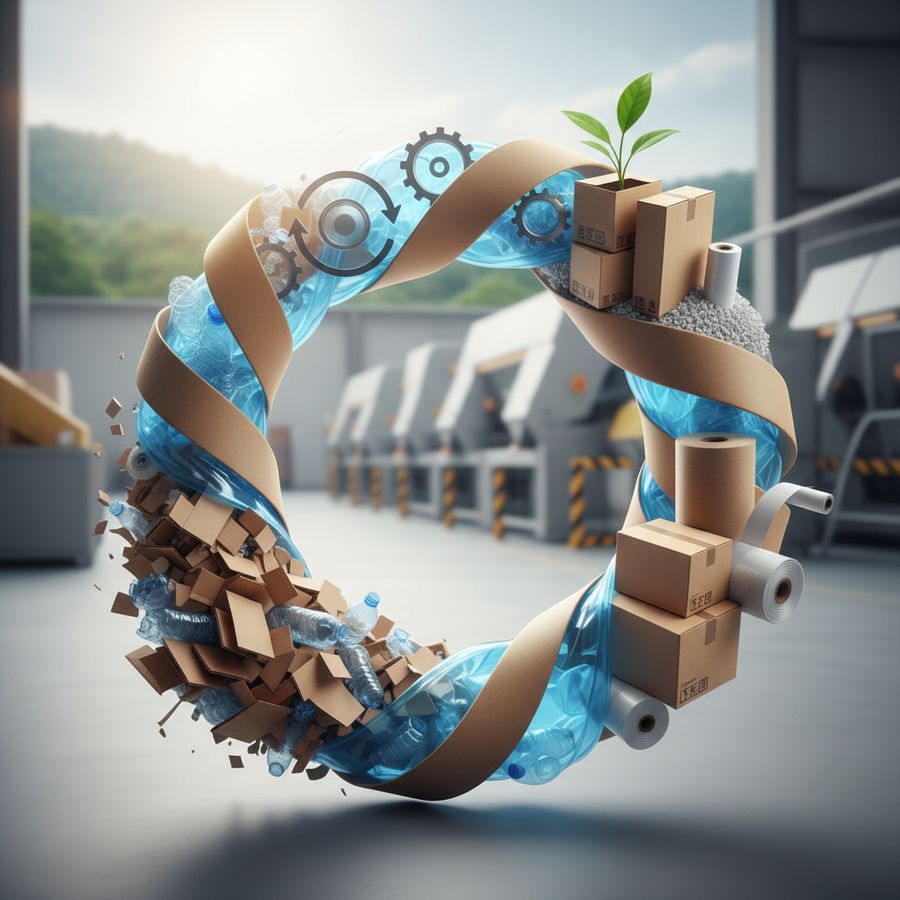
Circular packaging becomes most effective when the material quickly moves to its next step. Cardboard that is transformed locally into shock absorption and plastic that is volume-reduced directly creates order, frees up space, and strengthens the business's contribution to the circular economy. This makes sustainability work practical, measurable, and easier to scale up.
Reduced transport through volume reduction of waste
An often underestimated part of sustainable packaging management is how much air is actually transported in waste streams. Bulky plastic, styrofoam, and empty containers take up a lot of space in bins, containers, and transport vehicles. By working with volume reduction, companies can drastically reduce the number of pickups and thereby both costs and emissions.
When plastic bottles and containers are shredded, the volume can be reduced by about 90 percent. For polystyrene and EPS, compression can have an even greater effect, in some cases around 93 percent. This means that the same amount of material takes up a fraction of the original space. The result is smoother storage, cleaner waste areas, and more efficient logistics.
Less waste volume means fewer transports and better cost control
The benefits are quickly noticeable in operations:
-
fewer transports for waste disposal
-
lower costs for containers and pickups
-
more available space in warehouses and production
-
lower climate impact within the framework of the company's CSR
In the circular economy, volume reduction is an important complement to recycling and reuse. It ensures that the material not only gets a better path forward, but also that the path there becomes more resource-efficient. For companies with large packaging flows, this is a clear opportunity to combine environmental benefits with business benefits.
Examples of goals and metrics in CSR
For circular packaging work to have a real impact, it needs to be linked to clear goals. Within CSR, it is particularly important to be able to demonstrate both improvement and business value. Metrics help the business track how much material is destined for reuse, what proportion goes to recycling, and what cost and emission reductions are achieved.
Good goals should be concrete, realistic, and measurable over time. They should also be understandable to management, employees, and external stakeholders. When packaging becomes part of sustainability reporting, the link between daily operations and the company's overall responsibility is strengthened.
Examples of relevant metrics include:
-
percentage of used cardboard reused internally as filling material
-
reduction in new packaging purchases per year
-
volume reduction of plastic and polystyrene in percentage
-
number of reduced waste transports per month
-
estimated reduction in CO₂ emissions linked to packaging flows
Circular packaging becomes easier to develop when the company knows what needs to be measured. This creates focus, facilitates investments, and makes sustainability work more credible. In a modern circular economy, measurability is crucial to demonstrate that resources are indeed used more intelligently than before.
Conclusion
Circular packaging is not just a sustainable idea, but a practical strategy for making industry more resource-efficient. When companies view cardboard, plastic, and polystyrene as valuable material flows instead of waste, new opportunities arise to reduce costs, streamline logistics, and strengthen their own sustainability efforts.
By designing for reuse, simplifying recycling, creating clear internal flows, and reducing waste volume, noticeable results can be achieved. Less purchasing of new filling material, fewer transports, and better use of existing resources are concrete effects that make a difference in both operations and reported CSR. To learn more about how to implement these strategies, please visit Reppap.
The most important thing is to start with what's readily available. For many companies, packaging offers the fastest route into a more functional circular economy. With the right approach, waste can become a resource, and sustainability can become a natural part of daily operations.
When packaging gains new value, sustainability becomes something noticeable in both results and reality
0 comments