

Overview
Void fill material is an important part of the packaging process to protect products during transport and storage. The choice of the right void fill material not only affects the safety of the goods but also the environmental impact and cost-effectiveness. In today's increasingly environmentally conscious society, it is particularly important to choose void fill material that is both protective and sustainable.
Traditionally, both cardboard-based and plastic-based materials have been used for packaging void fill, but development is moving towards more environmentally friendly and recyclable alternatives. There is a clear trend where recycling and reduced carbon dioxide emissions are prioritized, making cardboard-based void fill increasingly attractive.
“Choosing the right void fill material is a step towards sustainable logistics and a circular economy.”
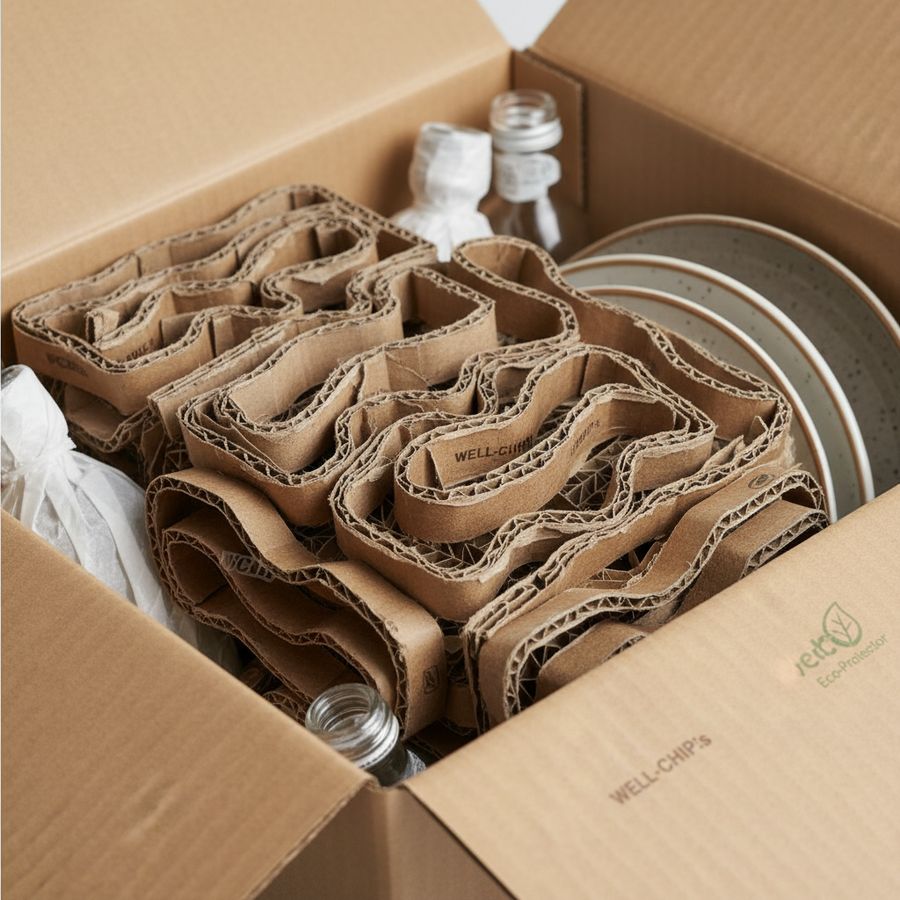
This guide provides an overview of the most common types of void fill materials, their advantages and disadvantages, and how they affect cost and recycling. Special focus is placed on cardboard-based void fill, such as ReppaP®’s WELL-CHIPs, which are made from recycled cardboard with minimal environmental impact.

Different types of void fill material for packages
There are several different types of void fill material used to protect products in packages, and the choice often depends on the product type, transport conditions, and environmental goals. The most common types are:
-
Cardboard-based void fill: Made from recycled cardboard, such as WELL-CHIPs. It is strong, light, environmentally friendly, and fully recyclable.
-
Plastic-based void fill: Includes bubble wrap, air cushions, and foam chips. These are often very shock-absorbing but can be more difficult to recycle and have a greater environmental impact.
-
Natural materials: Such as wood chips or corn starch-based chips. These are biodegradable but may have limited shock-absorbing capacity.
The choice between these materials is influenced by factors such as protection level, cost, environmental impact, and ease of recycling. Cardboard-based void fill material is particularly popular among companies that want to reduce their climate impact and make it easier for recipients to sort packaging correctly.
Packaging void fill must meet several requirements – it must be protective, cost-effective, and contribute to the company's sustainability efforts.
Cardboard-based void fill: advantages and disadvantages
Cardboard-based void fill like WELL-CHIPs offers several significant advantages, especially from an environmental perspective. As the material consists of recycled cardboard, its carbon footprint is very low. The products are manufactured in Sweden, which reduces transport distances and thus further emissions.
Another major advantage is that the void fill material is 100% recyclable and can easily be sorted by the recipient along with other cardboard, facilitating circular recycling. In addition, cardboard-based void fill provides stable and strong protection for products during transport. It is also an economical choice, especially for larger volumes, as a price guarantee is offered for bulk purchases.
“WELL-CHIPs combine environmental benefits with business benefits – a winning combination for both companies and the planet.”
However, there are some disadvantages to consider. Cardboard-based void fill can be less flexible than some plastic alternatives and can sometimes take up more volume in storage. The material is also sensitive to moisture, which can affect its shock-absorbing properties if not handled correctly.
In summary, cardboard-based void fill is an excellent choice for companies that prioritize sustainability without compromising on protection and cost-effectiveness.
Plastic-based void fill: when is it used?
Plastic-based void fill is still common in many industries due to its good shock-absorbing properties and flexibility. Materials such as bubble wrap, air cushions, and foam chips often provide effective protection for fragile products and can be easier to adapt to different packaging sizes.
It is primarily used when high shock absorption is required or in situations where moisture can be a problem, as plastic does not absorb water like cardboard does. Plastic void fill is also lightweight and can reduce shipping costs in some cases.
However, plastic-based materials have significant disadvantages from an environmental point of view. They are often more difficult to recycle, can contribute to plastic pollution, and generally have a higher carbon impact compared to cardboard-based alternatives.
-
Plastic void fill is often used in e-commerce with sensitive products.
-
Preferred for longer transports where extra protection is required.
-
Can be reused, but recycling is often limited.
Companies that want to reduce their climate impact are encouraged to consider cardboard-based void fill first, but plastic materials may still be relevant in certain niche applications.
Cost per package and storage space
The cost of void fill material varies depending on the material type, volume, and delivery terms. Cardboard-based void fill like WELL-CHIPs offers a competitive price, especially for larger orders where a price guarantee and fixed agreements can be signed.
An important aspect is also how much storage space the void fill material requires. Cardboard chips can take up more volume than compressed plastic void fill, which can affect storage costs. At the same time, cardboard materials are often easier to handle and sort, which can reduce labor time and cost.
“Considering both cost and environmental impact provides a more sustainable and profitable packaging solution.”
Plastic-based void fills are often more compact and can take up less storage space, but the total cost must be balanced against environmental costs and recycling opportunities. For companies with high demands on sustainability, cardboard-based void fill is therefore often the best choice from both an economic and environmental perspective.
Recycling and sorting for the recipient
One of the most important factors when choosing void fill material is how easy it is for the recipient to recycle and sort the material after use. Cardboard-based void fill material is often easier to sort because it can be discarded directly in cardboard recycling without extra sorting.
WELL-CHIPs are made from recycled cardboard and can return to the same cycle after use, reducing both waste volume and carbon footprint. This allows the recipient to contribute to sustainability with minimal hassle.
Plastic-based void fill often requires separate collection and recycling, which can be difficult for the end customer to handle correctly. This increases the risk of the material ending up in the wrong waste or incineration, which reduces the environmental benefit.
-
Cardboard void fill: easy sorting, high recycling rate.
-
Plastic void fill: often requires special handling.
-
Good recycling reduces the company's environmental footprint and improves the customer experience.
Conclusion
The choice of the right void fill material in cardboard or plastic is crucial for both product protection and the company's sustainability profile. Cardboard-based void fill, such as WELL-CHIPs from ReppaP®, offers an environmentally friendly, recyclable, and cost-effective solution that is easy for the recipient to handle.
Plastic-based materials have their advantages in certain situations, especially when extra shock absorption or moisture resistance is required, but their environmental impact and difficulty in recycling make them less attractive from a sustainability perspective.
“Choosing environmentally friendly void fill material is not only good for the planet but also for the company's brand and economy.”
By prioritizing cardboard-based packaging void fill, companies can reduce their CO₂ footprint, make it easier for recipients, and at the same time maintain a high level of protection for their products. It is a smart, green, and economical choice that combines environmental benefits with business benefits.
0 comments