

Overview
Reused cardboard has become an increasingly important part of the fight against climate change and the reduction of our carbon footprint. In a world where the environmental impact of production and consumption is constantly scrutinized, reusing cardboard offers a concrete and effective method for reducing greenhouse gas emissions. By reusing existing cardboard materials, products are packaged in a sustainable manner, contributing to a significantly lower climate impact than using newly produced packaging.
This method is not only an environmentally friendly packaging solution but also part of a larger movement towards sustainable logistics where the entire supply chain is optimized to minimize resource waste and emissions. Reused cardboard gives cardboard fibers an extended life cycle and reduces the need for new raw materials, which in turn leads to lower carbon dioxide emissions. This process also has socio-economic benefits, with companies like ReppaP® integrating social sustainability by including people who are far from the labor market in their production.
“Environmentally friendly packaging is not just a trend, but a necessity to ensure a sustainable future.”
In summary, reused cardboard is a smart and responsible solution that combines environmental benefits, cost-effectiveness, and social inclusion, making it an attractive choice for companies that want to minimize their climate impact.
What does reuse mean?
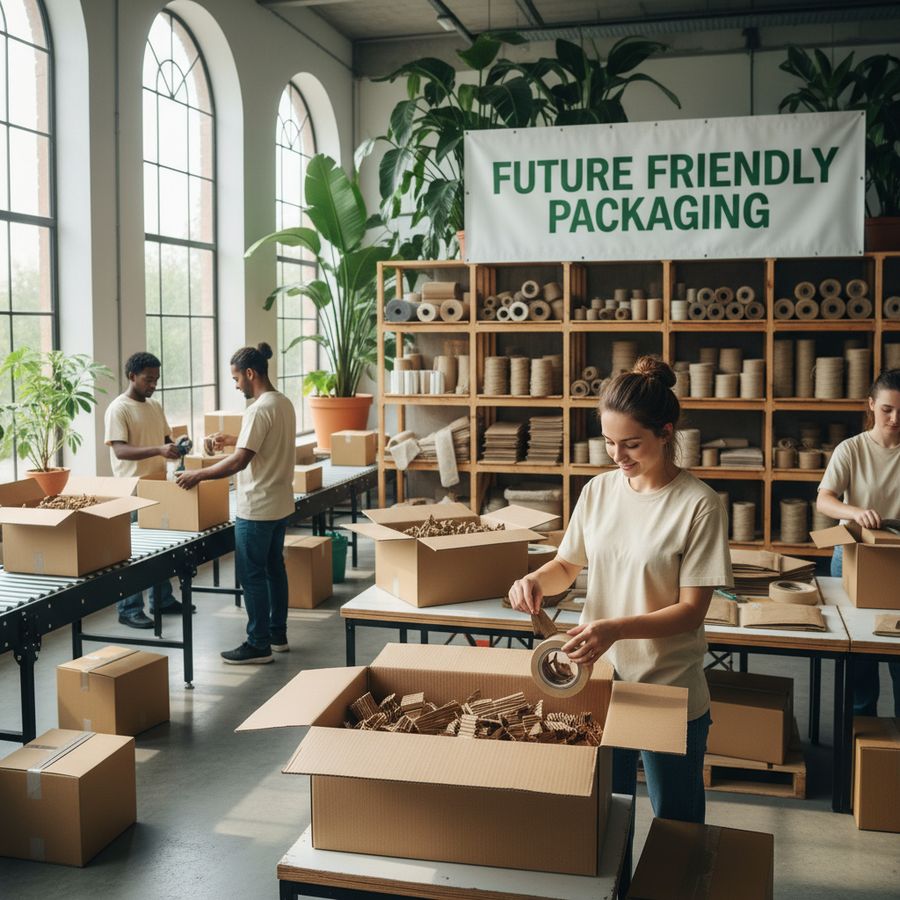
Reuse is about giving materials and products a new life instead of discarding them after their first use. In the case of cardboard, this means that already used and processed cardboard materials are collected, sorted, and formed into new packaging materials without undergoing a complete recycling and transformation into new raw materials.
What distinguishes reuse from recycling is that reuse usually requires less energy and fewer processes, as the material's original structure and function are preserved as much as possible. Reused cardboard can thus retain its strength and protective properties without needing to be broken down and rebuilt, which is common in traditional recycling.
The advantage of reuse is that it drastically reduces energy consumption and thereby reduces carbon dioxide emissions throughout the entire production chain. Furthermore, reuse helps to reduce the amount of waste and the burden on landfills and recycling centers.
-
Preserves the original material structure of the cardboard
-
Reduces energy use compared to new production
-
Extends the material's life cycle
-
Reduces waste and burden on the recycling system
Reused cardboard is therefore a practical and environmentally sustainable choice in the packaging industry, especially for companies that want to focus on eco-friendly packaging with minimal climate impact.
Carbon dioxide emissions during production
Cardboard production, especially newly produced, entails significant carbon dioxide emissions from several stages of the manufacturing process. Forestry, the pulp and paper industry, energy consumption in factories, and the transport of raw materials all contribute to emissions. Producing new cardboard requires extensive use of energy and water, and results in emissions of greenhouse gases such as carbon dioxide and methane.
In comparison, the production of reused cardboard has a much lower climate impact. Since reuse involves using already existing material, minimal reprocessing and energy consumption are required. This means that carbon dioxide emissions are almost non-existent in the continued life cycle of reused cardboard.
“The manufacturing of reused cardboard has almost zero CO₂ emissions in its extended life cycle.”
Companies like ReppaP® show how reused cardboard can be produced with almost 0 CO₂ emissions, especially when manufacturing takes place locally to minimize the climate impact of transport. This is an important aspect of working to create sustainable logistics and reduce a company's total carbon footprint.
By choosing reused cardboard as packaging material, companies can drastically reduce their climate impact and at the same time contribute to a circular economy where resources are used more efficiently and sustainably.
Comparison with new cardboard
A clear and important aspect of environmental work is to compare reused cardboard with newly produced cardboard to understand the differences in climate impact. New cardboard requires new raw materials from forestry, extensive chemical treatment, and energy-intensive processes, which leads to significant greenhouse gas emissions.
Reused cardboard, on the other hand, is based on already existing material that would otherwise become waste or be recycled in more energy-intensive processes. This method therefore saves resources and significantly reduces emissions. Studies and practical examples show that reused cardboard can result in up to 30% lower carbon dioxide emissions compared to new cardboard.
-
Reused cardboard requires less energy in production
-
Reduces the need for fresh raw materials
-
Reduces waste volumes and the burden on recycling
-
Contributes to a circular economy with extended material life cycles
The short transport distance for production in Sweden, offered by ReppaP®, also further reduces climate impact by reducing emissions from transportation. This makes reused cardboard one of the most environmentally friendly options for packaging filler on the market today.
Effects on the climate
The climate impact of packaging materials is a significant part of companies' total environmental footprint. By choosing reused cardboard, companies can reduce their greenhouse gas emissions and thus contribute to slowing down climate change.
Reused cardboard helps reduce the carbon footprint in several ways:
-
Reduced demand for new raw materials and thus reduced deforestation
-
Less energy consumption in production compared to new cardboard
-
Reduced emissions throughout the supply chain thanks to local production
-
Extended life cycle for cardboard material and reduced waste volume
“Using reused cardboard is an effective way to reduce climate impact throughout the entire supply chain.”
By integrating eco-friendly packaging into their operations, companies can also strengthen their brand and meet increased demands for sustainability from customers and authorities. This creates a positive spiral where sustainable logistics and responsible business go hand in hand for a better future.
Implementation in companies
Implementing reused cardboard as part of a company's packaging strategy is both simple and cost-effective. Many companies choose to collaborate with suppliers like ReppaP®, who offer daily delivery, price guarantees, and products made from 100% recyclable materials.
The key to successful implementation is to integrate the eco-friendly packaging solution throughout the entire logistics chain – from warehouse management to the end customer's receipt. This means:
-
Replacing plastic or newly produced void fillers with reused corrugated chips
-
Ensuring that staff are trained in sorting and handling the material
-
Optimizing purchasing and delivery schedules to minimize climate impact
-
Communicating the benefits of reused cardboard to customers and partners
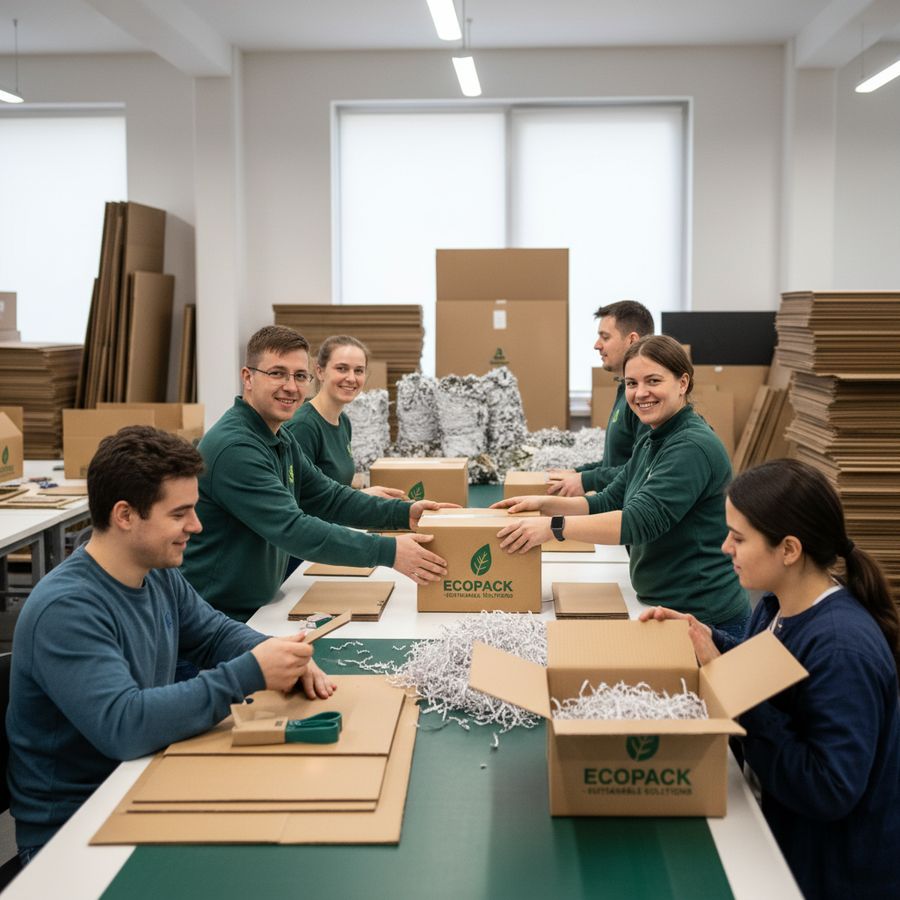
Companies that choose reused cardboard contribute not only to the environment but also to social sustainability, as production often provides work for people with various functional impairments and diagnoses, which strengthens inclusion and diversity.
“The implementation of sustainable packaging is an investment in both the environment and society.”
With the right partner and strategy, the transition to reused cardboard can be smooth and create long-term benefits for both the environment and business results.
Conclusion
In summary, reused cardboard is one of the most effective ways to reduce carbon footprint and climate impact in the packaging industry. By reusing cardboard materials, its life cycle is extended, energy consumption is reduced, and greenhouse gas emissions are minimized. If you want to know more about how you can contribute, please visit Reppap.
It is also a method that combines environmental sustainability with social responsibility, where production can contribute to inclusion in the labor market. Companies that choose this type of eco-friendly packaging not only gain a strong environmental profile but also a cost-effective and stable supply chain.
Sustainable logistics and reused cardboard go hand in hand to create a future where resources are used smarter and climate impact is minimized. Investing in reuse is therefore a wise and responsible choice for companies that want to take their environmental responsibility seriously.
“Reused cardboard is more than just packaging – it's an investment in our planet's future.”
0 comments