

Overview
Shock-absorbing void fill material is an important component in the packaging industry, where protecting products during transport and handling is paramount. Two of the most common options on the market today are WELL-CHIPS, which are made from recycled cardboard, and traditional plastic void fill. In this comparison, we examine these materials from an environmental perspective, highlighting their respective impacts on climate and sustainability.
WELL-CHIPS represent an innovative and environmentally friendly solution that uses existing cardboard material that would otherwise become waste. This means that the product has almost zero CO₂ contribution during manufacturing and that after use, it can be recycled as cardboard. Plastic void fill, on the other hand, is often based on newly produced plastic, which has a significantly greater environmental impact, both in production and throughout its lifecycle.
The environmental impact of packaging materials has become an increasingly prioritized topic, not only from a climate perspective but also with regard to the circular economy and resource efficiency. By using WELL-CHIPS, companies can reduce their CO₂ footprint while contributing to reduced plastic use and increased recycling. This article provides deeper insight into production, emissions, lifecycle, and economic aspects to help companies make a conscious and sustainable choice.
"Choosing the right shock-absorbing void fill material is not just about product protection, but also about its impact on our planet."
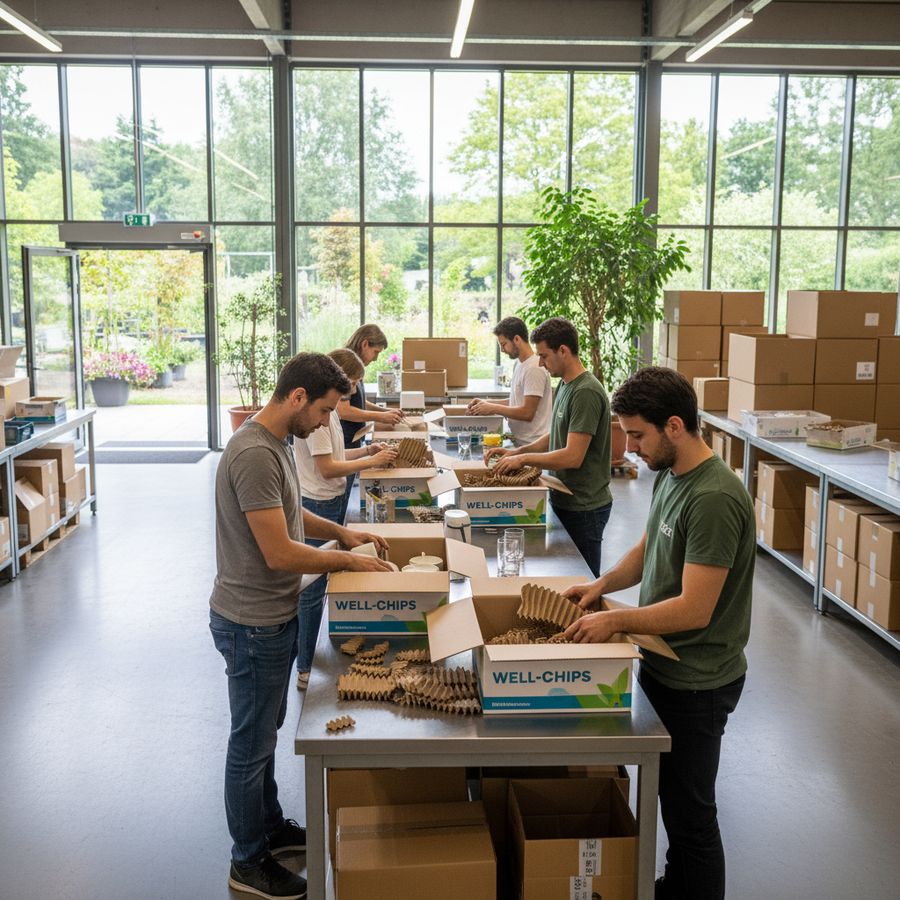
Production of WELL-CHIPS
WELL-CHIPS are unique because they are made from recycled cardboard, meaning the material gets an extended life without the need for new raw materials. This process requires minimal energy and adds virtually no extra CO₂ emissions compared to the new production of cardboard. Production takes place in Sweden, which results in short transport routes and thus a lower climate impact in the distribution chain.
Since WELL-CHIPS are made from already used cardboard material, no new fiber raw material is required, which is a great advantage from a resource and sustainability perspective. Production is also socially responsible, offering people with various functional variations opportunities for work, creating a dual positive effect: both environmental and social sustainability.
The recycled cardboard is robust and functions effectively as shock-absorbing void fill material, making WELL-CHIPS a reliable protection for fragile products. After use, WELL-CHIPS can be easily sorted and recycled as cardboard, closing the loop and minimizing waste.
Key environmental benefits of WELL-CHIPS production:
- Almost zero CO₂ contribution in manufacturing
- The material is 94% recycled paper
- Manufacturing takes place locally in Sweden to reduce transport emissions
- Contributes to the circular economy through reuse
- Social sustainability through an inclusive work environment
"By using recycled cardboard material in the production of WELL-CHIPS, both climate impact and the need for new raw materials are reduced."
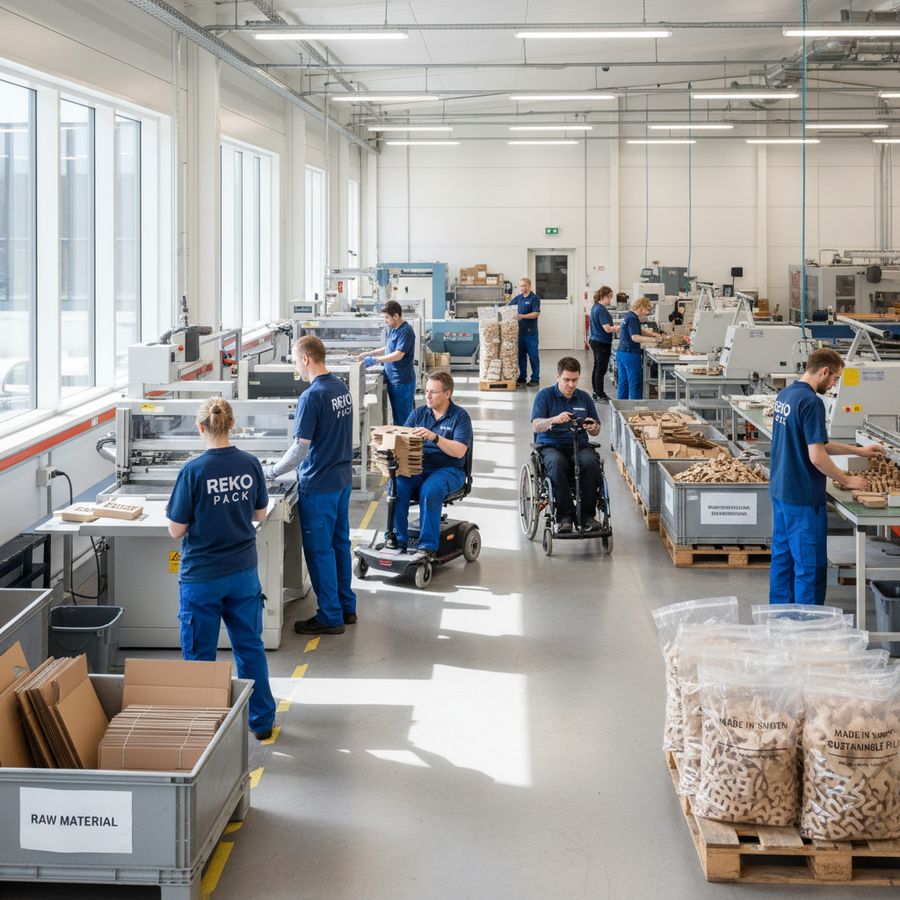
Environmental Impact of Plastic Void Fill
Plastic void fill is still a common solution in the packaging industry due to its flexibility and light weight. However, plastic production entails significant environmental and climate-impacting effects. Plastic is often made from fossil raw materials, which contributes to high CO₂ emissions already in the production phase. Furthermore, plastic's degradation time is very long, which creates problems with plastic waste and microplastics in nature.
Since plastic void fill is often for single use, and not always recycled in practice, its environmental impact can be extensive. Many plastic materials end up in incineration or landfill, leading to emissions of greenhouse gases and chemicals. The recycling process for plastic is also energy-intensive and can be inefficient depending on the type of plastic and local recycling systems.
The environmental impact of plastic void fill includes:
- High carbon dioxide emissions during raw material production and manufacturing
- Long degradation time in nature and risk of pollution
- Limited and often inefficient recycling systems
- Energy-intensive recycling and potential environmental emissions
- Negative impact on biodiversity and ecosystems
With an increasing focus on sustainability and the circular economy, pressure is growing on the industry to reduce plastic use and replace plastic void fill with more environmentally friendly alternatives such as WELL-CHIPS.
"The practical advantages of plastic void fill are often outweighed by its significant negative environmental effects, especially concerning CO₂ emissions and waste management."
CO₂ Emissions and Lifecycle
A crucial factor in the comparison between WELL-CHIPS and plastic void fill is the total CO₂ emissions throughout the product's entire lifecycle – from raw material and production to use and finally recycling or waste management.
WELL-CHIPS have a unique position because they are made from already used cardboard material and therefore do not require new raw materials or processes that add CO₂. Production has a CO₂ contribution of nearly zero, and short transport routes from manufacturing to the customer further reduce emissions. After use, WELL-CHIPS can be recycled as cardboard, meaning the material can re-enter a circular process with low climate impact.
Plastic void fill, on the other hand, has up to 30% higher CO₂ emissions compared to WELL-CHIPS, according to calculations based on typical production and use. The plastic's lifecycle includes initial production of fossil raw materials, energy-intensive manufacturing, and often limited recycling with incineration as a common final destination.
Lifecycle perspective for CO₂ emissions:
- WELL-CHIPS: Nearly zero CO₂ contribution in production, 94% recycled material, efficient recycling
- Plastic void fill: High emissions linked to raw material and production, often low recycling rate
- Transport losses are lower for WELL-CHIPS due to local production
- Reuse and circular use give WELL-CHIPS an advantage in the total lifecycle analysis
"Minimizing CO₂ emissions throughout the entire lifecycle is crucial for making packaging materials more sustainable and climate-smart."
Reuse vs. Recycling
One of the major advantages of WELL-CHIPS is that they are based on the reuse of cardboard material in its existing state. This means that cardboard that would otherwise have become waste gets a new lifecycle as packaging fill. This differs from traditional recycling where material must first be processed and returned to raw material, which requires energy and resources.
Reuse reduces the need for energy and chemicals because the material is not broken down into fibers and rebuilt – instead, it is used in its existing form. This makes WELL-CHIPS a very resource-efficient and climate-friendly solution.
Plastic void fill, on the other hand, often depends on recycling to reduce its environmental impact. However, since plastic is often composed of different polymers, recycling is complex and inefficient, and a large portion of plastic ends up in incineration or landfill. This limits plastic's ability to circulate in a sustainable cycle.
Benefits of reuse for WELL-CHIPS:
- Minimal energy consumption during production
- Simplified recycling and sorting for the end customer
- Extends material lifespan and reduces waste volumes
- Reduces the need for new raw materials and thus climate impact
- Contributes to the circular economy and sustainable resource use
"Reuse in its simplest form is one of the most effective methods for reducing the environmental impact of packaging materials."
Economic Benefits
In addition to the environmental benefits, WELL-CHIPS also offer significant economic advantages for companies choosing this shock-absorbing void fill material. Since WELL-CHIPS are based on recycled material and manufactured locally, the costs for raw material and transport are lower compared to plastic void fill.
Companies that switch to WELL-CHIPS often report reduced costs for both materials and handling. The price guarantee for bulk purchases from the manufacturer ReppaP® also makes it possible to plan purchases and budgets more cost-effectively. Furthermore, the lower environmental impact can contribute to positive effects in the company's ESG reporting and sustainability profile, which in turn can strengthen the brand and customer relationships.
Other economic benefits include:
- Reduced waste disposal fees due to easy recycling
- More efficient logistics thanks to locally produced material
- Increased customer satisfaction through sustainable packaging choices
- Stable supply and framework agreements for predictable costs
"Investing in WELL-CHIPS is not just an environmental choice, but also a smart economic decision for the sustainable companies of the future."
Conclusion
In summary, the comparison clearly shows that WELL-CHIPS are a much more environmentally friendly alternative to traditional plastic void fill. By using recycled cardboard material, WELL-CHIPS can offer a strong, protective, and eco-smart packaging solution with almost zero CO₂ emissions in production.
Plastic void fill still has a place due to its flexibility, but its significant negative environmental impact, high CO₂ emissions, and recycling issues mean it's time to consider sustainable alternatives. WELL-CHIPS also contribute to social sustainability by creating job opportunities for people with functional variations, adding further value to companies prioritizing CSR. To learn more about sustainable solutions, visit Reppap.
Companies that want to reduce their environmental impact while securing a cost-effective and reliable packaging solution should therefore consider WELL-CHIPS as a first choice.
"Choosing WELL-CHIPS means filling your packages – not your CO₂ account."
0 comments