

Overview
Well chips and EPS chips are two common types of packaging void fill materials used to protect products during transport. As environmental awareness increases, so does the interest in choosing more sustainable alternatives. This comparison focuses on environmental impact, recycling, and carbon footprint to provide a clear picture of the differences and benefits between these two materials.
Well chips are made from recycled corrugated cardboard and are an environmentally friendly option that combines protective function with low climate impact. They reuse cardboard waste and have a near-zero CO₂ additive during their lifecycle.
EPS chips, also called polystyrene chips or styrofoam chips, are made of plastic material and are well-known for their shock-absorbing ability. Despite their effectiveness, EPS material has a significantly higher environmental impact, primarily linked to production and difficulties in recycling.
"Choosing the right packaging void fill is an important part of reducing the total environmental impact of e-commerce and transport."
With increased demands for sustainability and recycling, it is important for companies and consumers to understand the differences in environmental impact between these materials to make better decisions that benefit both the economy and the planet.
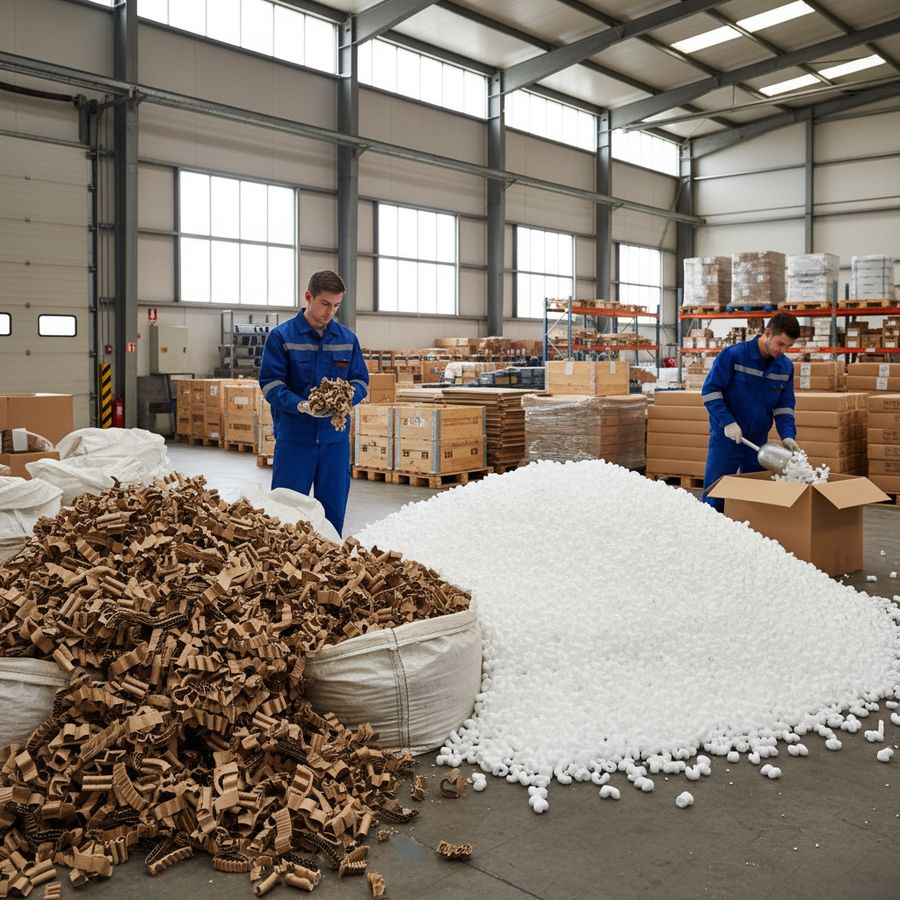
Material properties of well chips and EPS
Well chips are made from recycled corrugated cardboard, making them biodegradable and 100% recyclable. The material consists mostly of recycled paper, often up to 94%, which reduces the need for virgin raw materials and contributes to circular material use.
The unique structure of corrugated cardboard provides a light yet durable fill that protects against shocks and pressure without burdening the environment with plastic waste. In addition, well chips are adapted for easy sorting and can be thrown directly into paper recycling, which simplifies the cycle.
EPS chips consist of expanded polystyrene, a type of plastic that is very light and shock-absorbing. However, the material is non-biodegradable and can create significant environmental problems if it ends up in nature. In addition, recycling EPS is often more complicated and energy-intensive, which reduces its environmental benefits.
"EPS chips have good shock absorption, but the material's long degradation time and recycling difficulties make it a less sustainable choice."
In summary, well chips offer a more environmentally friendly profile with recyclability and biodegradability in focus, while EPS chips prioritize functionality but at the cost of a higher environmental impact.
Production impact
The production of well chips is strongly characterized by the use of existing cardboard material, which means that the CO₂ contribution in the manufacturing process is almost zero. This is because the material does not require new raw material but instead reuses fibers from previous life cycles. Production often takes place locally, which reduces transport-related emissions and contributes to shorter supply chains.
The production of EPS chips, on the other hand, involves the use of fossil raw materials such as polystyrene, which is a petroleum product. Manufacturing is energy-intensive and involves significant greenhouse gas emissions. In addition, the product is more difficult to recycle in industrial processes, which means that much of the material ends up in landfills or incineration.
Well chips are often manufactured in Sweden or nearby regions, which minimizes transport distances and thus further carbon dioxide emissions. Local production also creates jobs, often with socially responsible elements, which provides business benefits with heart.
"Climate-smart production with recycled materials and local manufacturing helps make well chips one of the market's most sustainable packaging solutions."
In summary, the production impact of well chips is significantly lower than that of EPS chips, making them a better choice for companies that want to reduce their climate impact and at the same time contribute to a more circular economy.
Recycling opportunities
One of the biggest advantages of well chips is their ease of recycling. Since they consist of corrugated cardboard, they can be thrown directly into regular paper recycling. This creates a smooth and efficient recycling process that reduces the risk of contamination in the material flow. Well chips thus contribute to creating a circular material use where the fibers can be reused multiple times.
EPS chips, on the other hand, are more difficult to recycle. Although the material is technically recyclable, it requires specialized facilities to handle and compress the voluminous and light polystyrene. Many municipalities do not offer recycling of EPS, which means that it often ends up in the trash or is incinerated, which increases the environmental impact.
-
Well chips: Can be recycled in regular paper recycling
-
EPS chips: Requires special recycling, often difficult for consumers to access
-
Environmental impact: Well chips reduce the risk of plastic pollution
"Recycling is a key factor in reducing plastic waste, and by choosing well chips, you make it easier for both yourself and the environment."
Given today's increased focus on sustainability and circular economy, well chips are a smarter choice from a recycling perspective, which can also help strengthen a company's environmental profile.
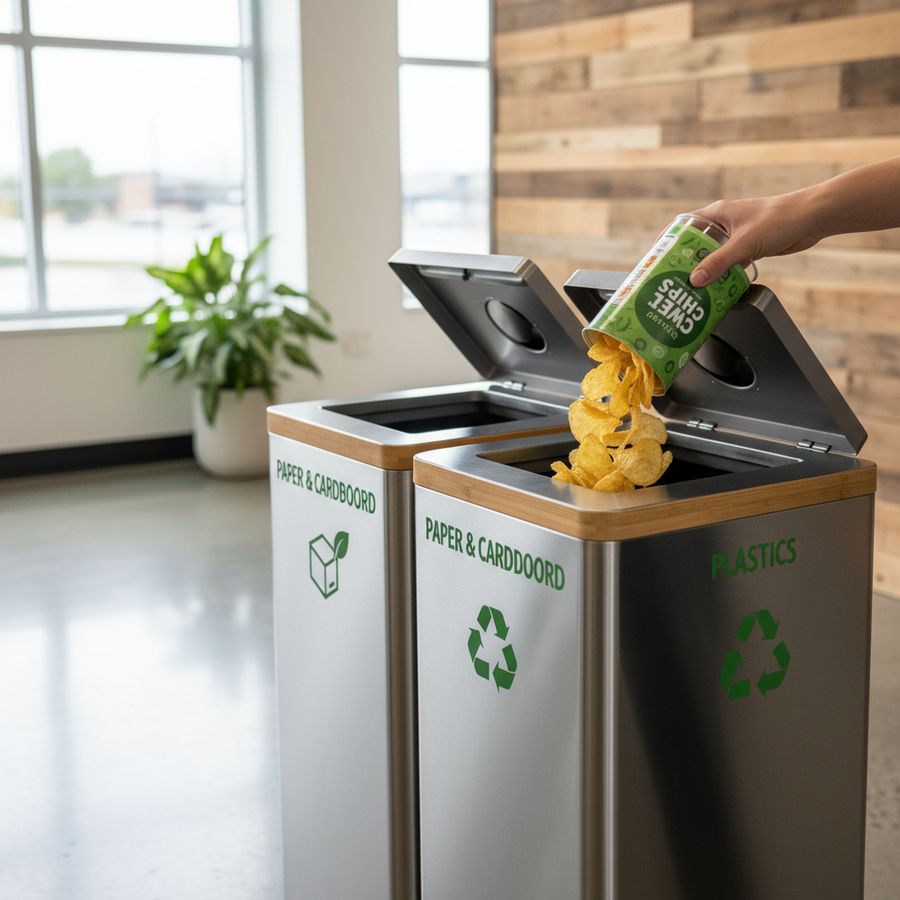
Carbon footprint
The carbon footprint is an important factor when assessing the environmental impact of packaging materials. Well chips have one of the market's lowest carbon footprints, thanks to being made from recycled cardboard and having a production that does not add additional CO₂. In addition, manufacturing often takes place close to the customer, which reduces transport-related emissions.
Compared to EPS chips, well chips can reduce CO₂ emissions by up to 30% or more, depending on comparison parameters. The manufacturing of EPS material from fossil-based plastic and its long degradation time means that its total carbon footprint is significantly higher.
It is also important to include the recycling potential in the carbon calculation. Well chips recycled in the paper flow help reduce the need for new production, while EPS often loses material value during recycling.
"By choosing well chips, companies can actively reduce their climate impact and contribute to a more sustainable society."
In summary, well chips are a more climate-friendly option with a low carbon footprint, making them a wise choice for companies that want to work sustainably and environmentally consciously.
Conclusion
After a thorough comparison, well chips emerge as the most environmentally friendly and sustainable option for packaging void fill compared to EPS chips. Well chips offer a combination of low environmental impact, easy recycling, and a minimal carbon footprint, thanks to their production from recycled corrugated cardboard and local manufacturing.
EPS chips can still be functionally effective for certain protective needs, but their fossil origin, difficult recycling process, and high climate impact make them less suitable in a world that increasingly values sustainability.
"Switching to well chips is not only an environmental choice but also an opportunity to promote social responsibility and a circular economy."
Companies that choose ReppaP® well chips not only get a smart and green solution but also contribute to a sustainable future where environment and society go hand in hand.
0 comments