

Overview
In today's society, the choice of environmentally friendly packaging materials is becoming increasingly important, both for companies and consumers who want to reduce their climate impact. Two of the most common void fill materials for protecting products during transport are well chips and EPS chips. These two materials differ significantly in terms of manufacturing process, environmental impact, and recycling opportunities. In this comparison, we focus on their environmental aspects and how they contribute to sustainable development.
Well chips are made from recycled corrugated cardboard and offer an environmentally friendly alternative that can be reused and recycled in paper recycling. They are biodegradable and have a low climate impact. EPS chips
This article highlights the differences between these two materials based on several important aspects: manufacturing process, environmental impact during use, opportunities for recycling and reuse, as well as cost and efficiency. The goal is to provide a clear and factual picture of which packaging material is most environmentally friendly and cost-effective for various needs.

What are well chips and EPS chips?
Well chips consist of small pieces of recycled corrugated cardboard. They are used as void fill material in boxes to protect fragile goods during transport. The material is 100% recyclable and has a very low climate impact as it is based on the reuse of existing cardboard material. Well chips are biodegradable and can be easily disposed of in paper recycling after use.
EPS chips
In summary, well chips are a more environmentally friendly packaging material thanks to their sustainable raw material source and good recyclability, while EPS chips offer good protection but at the cost of higher environmental impact and more complex recycling.
Manufacturing process
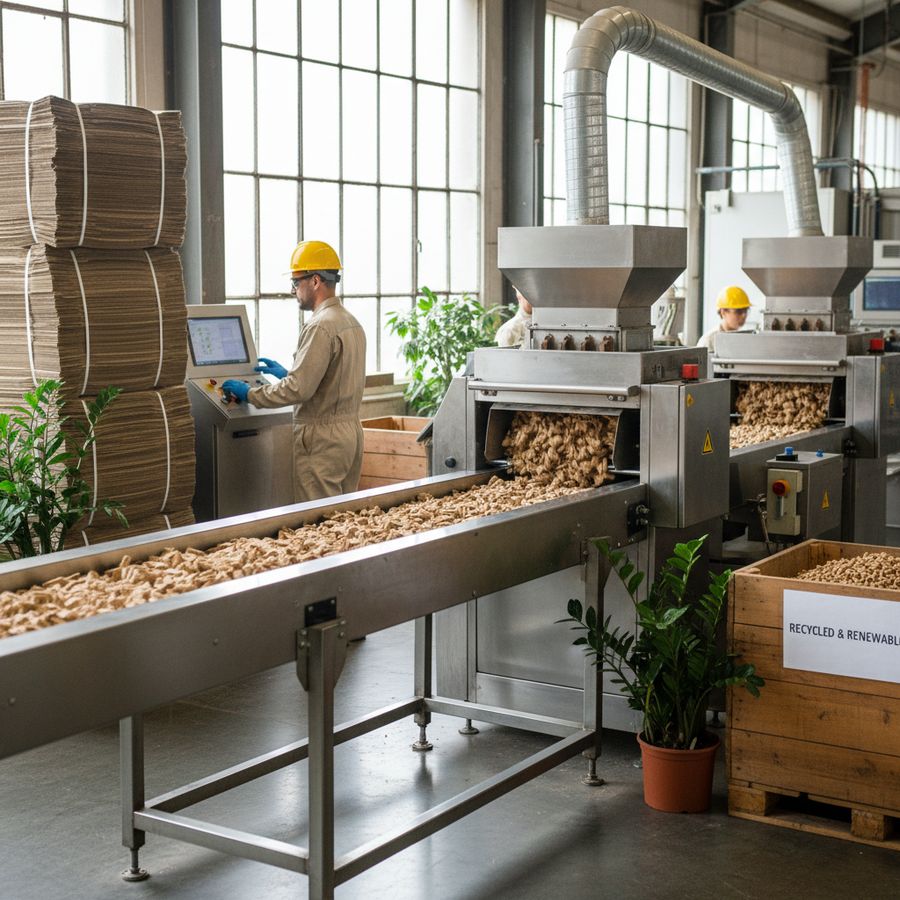
Well chips are produced by reusing existing corrugated cardboard, which means the material gets an extended life cycle without the need for new raw material production. The manufacturing process is simple and requires minimal energy, leading to almost zero CO₂ emissions during production. Furthermore, since well chips are manufactured in Sweden, transport distances and thus indirect emissions are minimized.
On the other hand, the manufacturing of EPS chips is more energy-intensive. They are produced through a process where polystyrene is expanded using chemical propellants and heat. This process relies on fossil fuels, which contributes to significant greenhouse gas emissions. In addition, the raw material is petroleum-based, which involves the extraction of finite resources.
“The manufacturing process of well chips is a clear example of how reuse can radically reduce environmental impact compared to conventional plastic materials.”
In summary, well chips are a significantly more environmentally friendly product in the manufacturing phase compared to EPS chips, both in terms of resource use and greenhouse gas emissions.
Environmental impact during use
During use, both well chips and EPS chips primarily serve to protect products from damage, which reduces waste and the need for repackaging and new transports. This is an important aspect as the protective ability of the packaging material can affect the overall environmental impact.
Well chips are biodegradable and absorb moisture, which makes them less suitable for certain damp or wet environments, but their environmental benefits during use are significant. They do not chemically affect the product and are completely harmless to handle. EPS chips, on the other hand, are water-repellent and can be used in damp environments, but they are sensitive to static electricity and can easily detach, which can lead to dispersed plastic particles that are difficult to collect.
Another important aspect is the risk of microplastic emissions. EPS chips can break down into small plastic particles that remain in nature for a long time, while well chips degrade naturally. This makes well chips more environmentally friendly from a long-term perspective.
-
Well chips effectively protect and have minimal negative environmental impact during use.
-
EPS chips provide strong protection but can contribute to plastic pollution.
-
The choice is influenced by the product's needs and transport environment.
Recycling and reuse
Recycling is a central factor when comparing the environmental impact of well chips and EPS chips. Well chips are made from 100% recycled cardboard and can, after use, be easily sorted as paper waste and recycled in the same system. This means that the material can be part of a circular economy where the fibers get new life in new paper and cardboard products.
EPS chips, on the other hand, are more difficult to recycle. They require specialized facilities and collection systems that are not always available, which means a large proportion of EPS chips end up in waste management or in nature. The material is not biodegradable and can remain in the environment for hundreds of years if it is disposed of incorrectly.
Reuse is also important. Well chips can be reused several times within warehouse and packaging environments before finally being recycled, which further reduces environmental impact. EPS chips have limited possibilities for reuse due to their shape and sensitivity to degradation during handling.
“One of the biggest advantages of well chips is that they contribute to a circular packaging solution where waste becomes a resource.”
In summary, well chips are superior to EPS chips when it comes to recycling and reuse, which is crucial for reducing the environmental impact of packaging materials.
Cost and efficiency
When choosing packaging void fill, cost-effectiveness is an important factor, but it is also important to consider environmental friendliness. Well chips often have a slightly higher purchase cost compared to EPS chips, but thanks to their recyclable and reusable properties, they can provide long-term savings.
Since well chips are made from recycled cardboard and produced locally in Sweden, transport costs and environmental impact are reduced, which is an economic and environmental advantage. In addition, users have reported that well chips are easy to handle and sort, which saves time and reduces waste management costs.
EPS chips are often cheaper to buy and offer excellent shock absorption per volume, but can incur higher costs in the form of environmental fees and waste management. The difficult recycling can lead to increased costs for waste management, and in some cases, the material may need to be replaced more often if it breaks or spreads.
-
Well chips offer long-term cost-effectiveness thanks to recycling and local production.
-
EPS chips are initially cheaper but can become more expensive in handling and environmental fees.
-
The efficiency of protection and handling should be weighed against environmental and cost aspects.
Conclusion
In summary, well chips are a clearly more environmentally friendly alternative to EPS chips when it comes to packaging void fill. Thanks to their production from recycled cardboard with close to zero CO₂ emissions, biodegradability, and good recycling opportunities, well chips contribute to a sustainable and circular economy. To learn more about sustainable packaging alternatives, visit Reppap. EPS chips have the advantage of being lightweight and offering good shock absorption, but their production is energy-intensive and dependent on fossil raw materials. The limited recycling and risk of plastic pollution mean that EPS chips have a significantly greater negative environmental impact.
“Choosing well chips is investing in a greener future where packaging protection is combined with responsibility for our planet.”
Companies and consumers who want to reduce their environmental impact should therefore consider well chips as a smart and sustainable choice for packaging void fill. By choosing environmentally friendly packaging material such as well chips, one not only contributes to reduced carbon dioxide emissions but also to a cleaner and more sustainable world.
0 comments