

Overview
Recycled cardboard is a central component in today's pursuit of a more sustainable and circular economy. The traditional linear economy, where products are manufactured, used, and then discarded, is no longer sustainable as environmental impact increases and resources become more limited. Using recycled cardboard as a material for void fill contributes to extending the material's lifecycle and reduces the need for virgin raw materials.
This article highlights how cardboard recycling contributes to the circular economy, with a particular focus on void fill. We will cover what a circular economy entails, the role of cardboard in the packaging industry, environmental impact, economic benefits, and provide examples from the industry that demonstrate real gains and opportunities.
Recycled cardboard functions as a smart, environmentally friendly, and economical solution that reduces waste and CO₂ emissions. By using cardboard that has already had a life cycle, an extended period of use is created for the material, which is a key principle within the circular economy.
"Fill your packages - not your CO₂ account." – A slogan that captures the essence of using recycled cardboard as void fill.
With an increasing demand for sustainable packaging solutions and a growing focus on environmental and social responsibility, recycled cardboard creates new opportunities for companies to both reduce their environmental impact and at the same time increase business value.
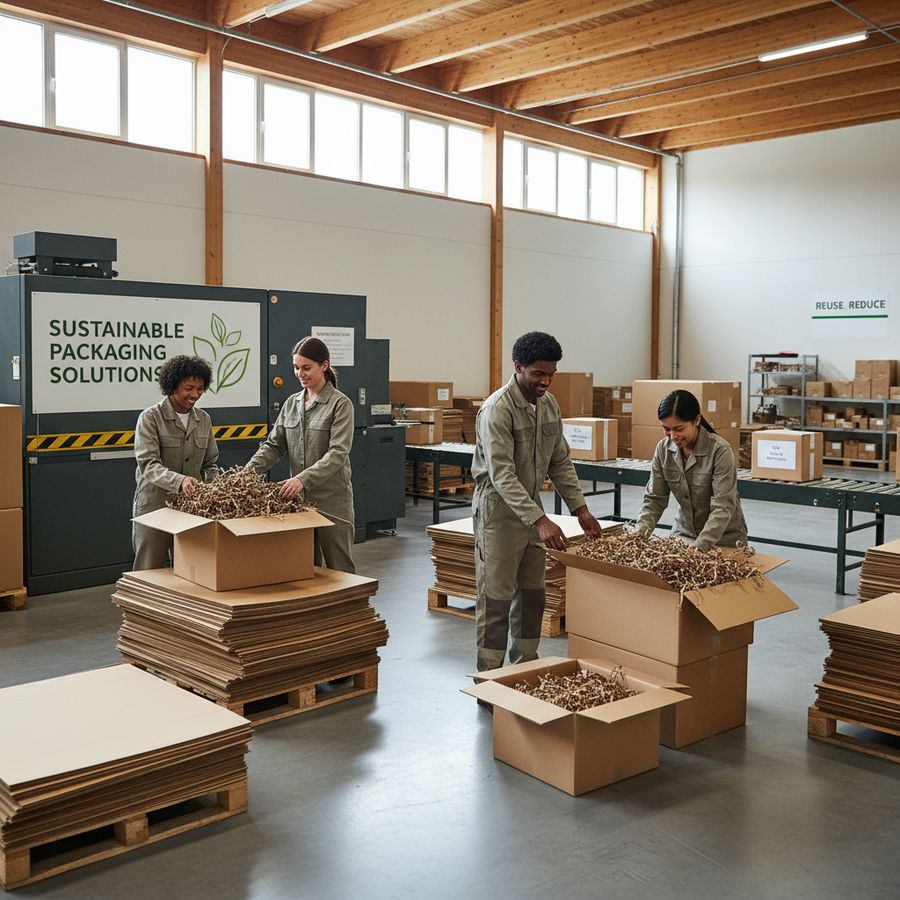
What is a circular economy
A circular economy is an economic system that aims to minimize waste and maximize the reuse of resources. Unlike the traditional linear model, which is based on "take, make, dispose," a circular economy focuses on keeping materials and products in use for as long as possible.
This is achieved by designing products for reuse, recycling, and repair, and by using materials that can be recycled or reused efficiently. In practice, this means that resources circulate in the economy without wasting valuable raw materials or creating unnecessary emissions.
Recycled cardboard is an excellent example of a circular economy in practice. By reclaiming cardboard that has already been used and giving it a new life as void fill, we reduce the need to produce new cardboard from virgin fibers.
-
Minimizes waste and extends material lifespan
-
Reduces greenhouse gas emissions and energy consumption
-
Strengthens local economies through shorter transport routes and local production
-
Contributes to companies' sustainability goals and corporate social responsibility
A well-functioning circular economy is not only good for the environment but also for companies' long-term competitiveness. By implementing circular principles like recycled cardboard in their processes, companies can reduce costs and create a more resilient operation.
"Circular economy is about creating systems where resources never become waste, but are constantly reused and given new life."
Recycling cardboard in packaging
Recycling cardboard in packaging has become an increasingly important strategy for companies that want to reduce their environmental impact. Instead of using brand new cardboard, existing cardboard material is reused, which extends the material's lifecycle and reduces the need for new raw materials.
A concrete example of this is WELL-CHIPs, which are void fill made from recycled cardboard. These filling materials protect products during transport while also being environmentally friendly and recyclable. This type of packaging solution is part of a larger trend towards sustainable packaging where the material's origin, lifespan, and recyclability are in focus.
The benefits of recycled cardboard as void fill include:
-
High protective capacity for products due to the cardboard's stable structure
-
Environmentally friendly with almost zero CO₂ emissions in the production phase
-
Easy for consumers to recycle after use
-
Reduces the amount of waste by using existing material
It is also important to point out that recycled cardboard is compatible with existing recycling systems, which means that the end-customer can easily sort and recycle the material after use. This facilitates the entire circular chain from production to recycling.
"Our products are made from recycled cardboard – one of the market's most environmentally friendly filling solutions."
By integrating recycled cardboard into the packaging process, companies can not only reduce their environmental impact but also offer a more sustainable product experience for their customers.
Environmental impact
Environmental impact is one of the most tangible aspects when discussing cardboard recycling and the circular economy. Using recycled cardboard for void fill significantly reduces greenhouse gas emissions compared to manufacturing new cardboard or using plastic-based filling materials.
According to calculations, recycled cardboard can contribute to up to 30% lower CO₂ emissions compared to traditional plastic packaging fill. This is because the production of WELL-CHIPs and similar products occurs with almost zero additional CO₂, as the material has already undergone its original manufacturing process.
Several factors contribute to the positive environmental impact:
-
Material reuse: The cardboard fibers get an extra life cycle, reducing the need for new production.
-
Locally produced: Manufacturing in Sweden reduces transport-related emissions.
-
Recyclability: The product can be easily recycled in cardboard recycling, closing the material loop.
-
Social sustainability: Production creates jobs for people with disabilities and other groups far from the labor market, supporting an inclusive work environment.
By choosing void fill made from recycled cardboard, companies can thus significantly reduce their climate impact and at the same time contribute to a more just society. It is a double win for both the environment and social responsibility.
"Environmentally friendly void fill made from recycled cardboard – fill your packages, not your CO₂ account."
Reducing environmental impact is becoming increasingly important in a world where climate change demands immediate and sustainable solutions. Recycled cardboard is a concrete step towards a greener future.

Economic benefits
Using recycled cardboard as void fill not only brings environmental benefits but also significant economic advantages for companies. Cost-effectiveness and price competitiveness are crucial factors in today's market, and sustainable solutions that also save money are increasingly sought after.
A key economic advantage is that recycled cardboard often costs less than newly produced void fill materials, especially plastic-based alternatives. Since the cardboard is already processed and does not require new raw materials or extensive manufacturing, production costs are lower.
-
Price guarantee for bulk purchases: Many suppliers, such as ReppaP®, offer a price guarantee for large volumes, providing stable and predictable costs.
-
Daily delivery: Efficient delivery solutions reduce warehousing costs and ensure that void fill material is available when needed.
-
Reduced transport costs: Local production and short transport routes contribute to lower freight costs compared to imported products.
-
Efficient handling: The product is easy to handle and use in the warehouse, saving time and labor.
In addition to direct cost savings, sustainable packaging solutions contribute to positive brand building and strengthen the company's relationship with customers, which can lead to increased sales and customer loyalty.
"With ReppaP® we save both money and CO₂ - and customers love it." – Warehouse Manager, E-commerce
By choosing recycled cardboard as void fill, companies gain a competitive advantage in terms of both lower costs and increased sustainability, which is a winning combination in today's business landscape.
Examples from the industry
Several companies in e-commerce and retail have already implemented recycled cardboard as part of their packaging strategies and report positive results both environmentally and economically.
A notable example is ReppaP® which produces WELL-CHIPs – a void fill made from 100% recycled cardboard, with daily delivery across Sweden. The company collaborates with social enterprises that provide work for people with disabilities, creating an inclusive and sustainable production chain.
Companies using WELL-CHIPs report:
-
Easier handling and sorting for recycling
-
Stable delivery and reliable agreements
-
Reduced costs and CO₂ emissions
-
Positive response from end-customers who value environmentally friendly packaging
This clearly shows how recycled cardboard is not just a theoretical solution but a practical and scalable one that works well in reality, especially in the logistics and packaging industry.
"Easy for me as an end-user to sort for recycling. Everything goes into the corrugated container." – End-customer of one of our clients
This type of success story inspires more companies to follow suit and invest in circular and sustainable packaging solutions.
Conclusion
Recycled cardboard is an important puzzle piece in the development towards a more sustainable and circular economy. By using cardboard that has already had a life cycle as a material for void fill, companies can reduce their environmental impact, lower costs, and at the same time contribute to social sustainability. To learn more about how you can use recycled cardboard, visit Reppap.
The circular model that this form of recycling represents is a way away from linear and resource-intensive systems. It creates conditions for a more resilient and environmentally responsible business sector where waste is transformed into value.
In summary:
- Recycled cardboard reduces CO₂ emissions and saves natural resources
- It is a cost-effective solution with price guarantee and local production
- Contributes to simpler and more sustainable recycling for the end-customer
- Creates social benefits through inclusive labor market initiatives
"Choosing recycled cardboard is not just an environmental choice, it's a smart business choice."
Companies that integrate recycled cardboard into their packaging processes are leading the way in sustainable development and at the same time strengthening their position in an increasingly environmentally conscious market.
0 comments