

Overview
WELL-CHIP:s have quickly become a crucial component in the pursuit of a more sustainable and circular economy within the packaging industry. As an environmentally friendly filling material made from recycled cardboard, WELL-CHIP:s offer an innovative solution that combines product protection with minimal environmental impact. In this article, we will explore how WELL-CHIP:s contribute to the circular economy, what it entails in practice, and the positive effects it has on both the environment and society.
With increasing global awareness of climate impact and resource management, the need for sustainable packaging has become greater than ever. WELL-CHIP:s are an excellent example of how to extend the life cycle of materials and reduce waste volumes. By reusing cardboard that has already been in use, a product is created that is not only functional and protective but also has almost zero CO₂ emissions in its production chain.
This eco-friendly packaging solution is manufactured in Sweden, which ensures short transportation routes and thus further reduces the climate footprint. At the same time, WELL-CHIP:s represent social sustainability as production focuses on inclusion, providing meaningful employment opportunities for people with disabilities and others on the margins of the labor market.
"WELL-CHIP:s show that sustainability is not just about the environment, but also about creating social value and business benefits with heart."
In the following sections, we will delve deeper into what the circular economy means, WELL-CHIP:s specific role in this model, and provide examples from the industry that underline the importance of reuse and recycling as key factors for future sustainable packaging.
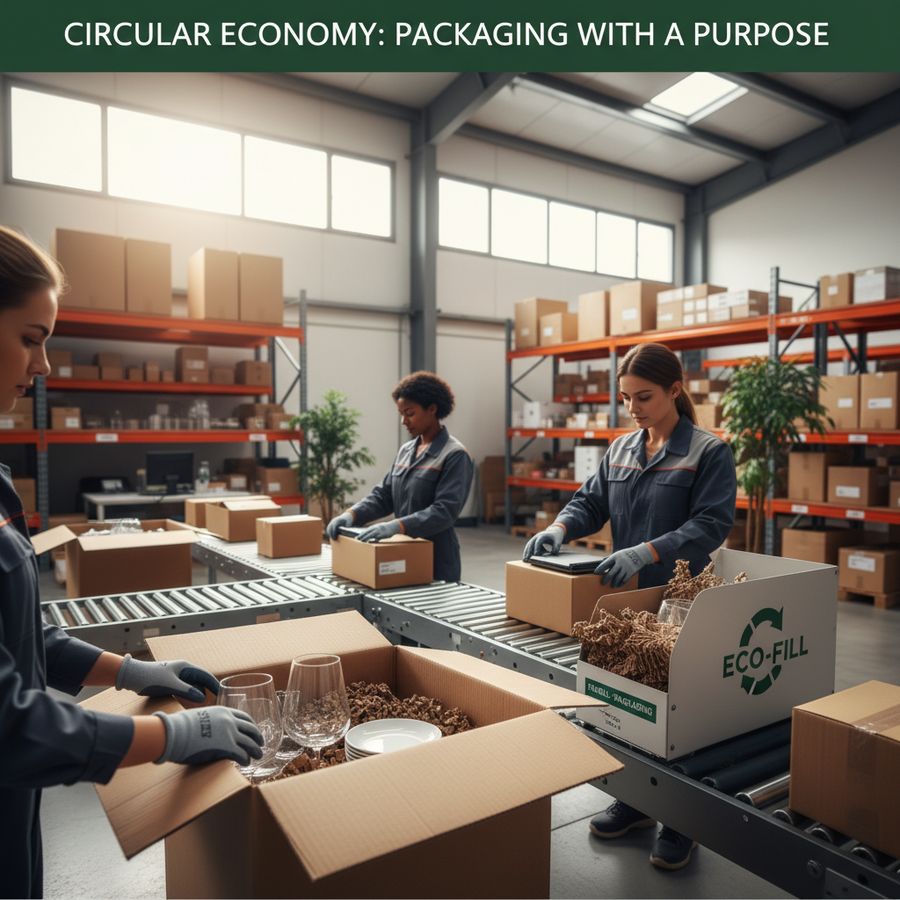
What is the circular economy?
The circular economy is an economic system that aims to minimize waste and maximize resource utilization by creating closed loops for materials and products. Instead of the traditional linear model – where products are manufactured, used, and then discarded – the circular economy is based on principles of reuse, recycling, and extending product lifespans.
This model is not only an environmental strategy but also an economic opportunity where companies can save costs, reduce their climate footprint, and strengthen their brand. By designing products and processes to be more sustainable and easier to reuse or recycle, a more resilient and efficient economy can be created.
Key principles of the circular economy:
- Reuse and recycling: Materials and products circulate in the economy for as long as possible.
- Resource efficiency: Reduced use of raw materials and energy.
- Systems thinking: Integration of recycling and reuse as a natural part of the production and consumption chain.
In the packaging industry, this means choosing materials with low environmental impact that are easy to recycle and reuse, and minimizing waste throughout the supply chain. WELL-CHIP:s are a clear example of how the circular economy can be put into practice, as the product is based on the reuse of cardboard, which extends the material's life cycle and reduces the need for new production.
Well-chip:s role
WELL-CHIP:s are not just a filling material for packaging – they are a vital puzzle piece in the circular economy's ecosystem. By using already used cardboard as raw material, the fibers are reused in their existing state, almost eliminating CO₂ emissions in the manufacturing process.
This unique product is designed to protect fragile products during transport while being 100% recyclable and made from eco-friendly materials. By choosing WELL-CHIP:s, companies can reduce their dependence on plastic-based filling materials, which often have a significantly higher climate impact.
Benefits of WELL-CHIP:s in the circular economy:
- Cardboard reuse: The material gets an extended life by reusing cardboard in its existing state.
- Environmentally friendly production: Manufacturing takes place with zero CO₂ impact, making the product climate-neutral.
- Recyclable: After use, WELL-CHIP:s can be easily disposed of in cardboard recycling.
- Social sustainability: Production provides employment opportunities for people with disabilities and other groups who are far from the labor market.
By integrating WELL-CHIP:s into their packaging chain, companies contribute not only to a smarter and greener logistics solution but also to a more inclusive labor market and reduced environmental impact. This is a clear example of how sustainability and business benefits can go hand in hand.
Reuse and recycling
Reuse and recycling are the cornerstones of the circular economy and central to the WELL-CHIP:s concept. By using existing cardboard material as a raw material for WELL-CHIP:s, the need for new production is avoided, which saves both raw materials and energy.
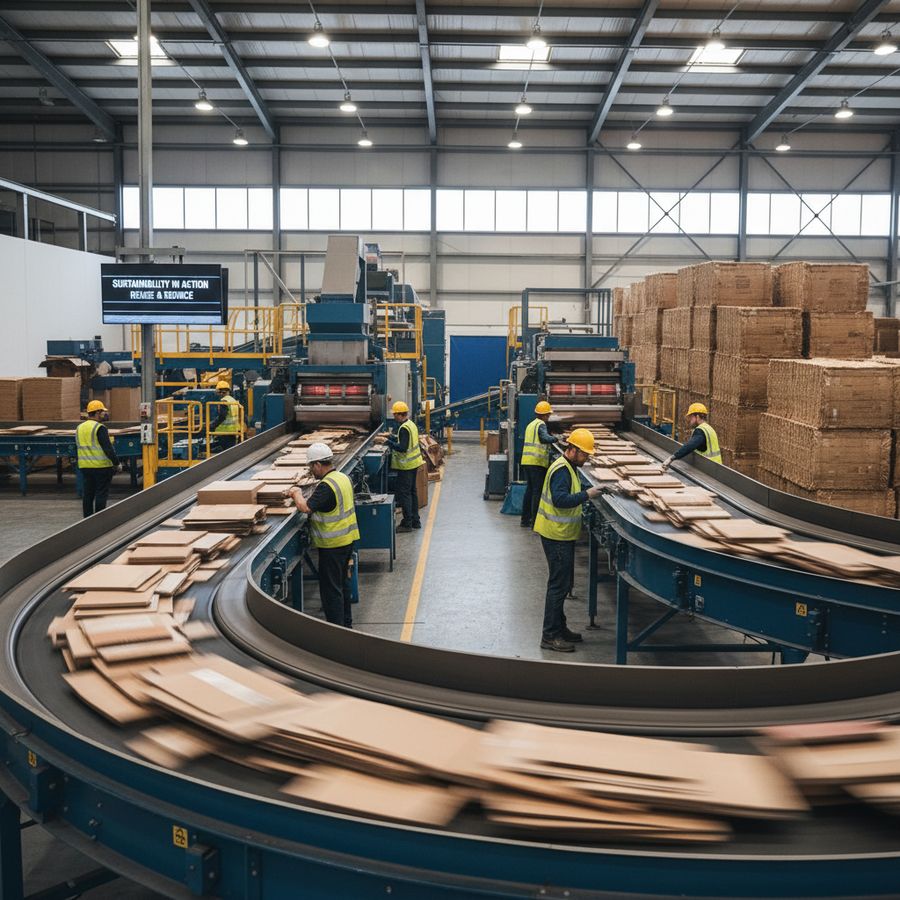
Reuse means that the material is used directly in its existing form without extensive processing. This is an environmentally smart method as it requires minimal energy and chemicals compared to recycling fibers into new cardboard. After WELL-CHIP:s have been used as packaging material, they can then be recycled as cardboard, ensuring that the material continues to circulate in the economy.
The process can be summarized as follows:
- Used cardboard is collected and cut into WELL-CHIP:s in its existing state.
- WELL-CHIP:s are used as protective filling in packaging.
- After use, WELL-CHIP:s are easily sorted into cardboard recycling.
- The material is recycled and transformed into new cardboard or other paper products.
"By choosing WELL-CHIP:s, you contribute to a circular material use where every fiber gets to live multiple lives."
This method reduces waste volumes and contributes to lower greenhouse gas emissions as it minimizes the need for virgin raw materials. This makes WELL-CHIP:s a prime example of sustainable packaging and a practical tool for companies that want to strengthen their environmental ambitions.
Environmental and social effects
WELL-CHIP:s have significant positive effects on both the environment and society – something that is becoming increasingly important in today's sustainability-focused business climate. By using recycled cardboard as raw material, the production of WELL-CHIP:s reduces the need for new cardboard production, which in turn leads to lower carbon dioxide emissions and less waste.
Compared to traditional plastic-based filling materials, WELL-CHIP:s can reduce CO₂ emissions by up to 30%. This is a significant saving that makes a difference in the fight against climate change. Furthermore, manufacturing takes place in Sweden, which means short transportation routes and further reduced climate impact.
On the social level, WELL-CHIP:s production is linked to an inclusive work model. The company behind WELL-CHIP:s collaborates with people who are often outside the regular labor market, such as people with diagnoses, disabilities, flexible workers, and retirees.
"When you choose WELL-CHIP:s, you not only support the environment – you also contribute to inclusion and social sustainability."
This creates a dual benefit where environmental sustainability is combined with social responsibility. Working with WELL-CHIP:s therefore means that companies can deliver products with strong CSR value, which is appreciated by both customers and partners.
Examples from the industry
Several companies in e-commerce and retail have already integrated WELL-CHIP:s into their packaging solutions and report both economic and environmental benefits. A warehouse in the e-commerce sector reports that they save both money and CO₂ by switching to WELL-CHIP:s as filling material.
A purchasing manager in retail highlights stable delivery and the possibility of fixed framework agreements as an important reason for choosing WELL-CHIP:s. Furthermore, it is easy for end customers to sort WELL-CHIP:s for recycling, which strengthens the company's sustainability profile throughout the supply chain.
The clear environmental benefit combined with socially sustainable production has made WELL-CHIP:s a prime example of sustainable packaging in Sweden. Many companies also appreciate the possibility of daily delivery and price guarantee for bulk purchases, which creates an efficient and cost-saving logistics solution.
"With WELL-CHIP:s, we get a smarter, greener, and more economical solution for our packaging." – Warehouse Manager, E-commerce
Conclusion
WELL-CHIP:s are an excellent example of how innovation and sustainability can be combined to create products that support a circular economy. With their unique manufacturing from recycled cardboard, almost zero CO₂ emissions, and socially responsible production, WELL-CHIP:s offer a comprehensive solution for sustainable packaging. To learn more, please visit RepPap.
By choosing WELL-CHIP:s, companies take a step towards reducing their climate impact, promoting reuse and recycling, and contributing to inclusive labor markets. This is business benefit with heart and a path towards the future of sustainable consumption and production.
Integrating WELL-CHIP:s into your packaging strategy means actively supporting the circular economy, strengthening your environmental responsibility, and contributing to a more sustainable society – for real.
0 comments