

Overview
Reducing shipping costs with recycled cardboard is an effective and sustainable strategy for companies looking to optimize their logistics chains while also contributing to the environment. By using recycled cardboard as void fill and packaging, one can not only lower costs but also reduce their carbon footprint.
This method involves reusing existing corrugated cardboard boxes and converting them into shock-absorbing material that protects products during transport. It reduces the need to purchase new void fill material and minimizes waste, which is both economically beneficial and environmentally friendly.
Smart packing is about optimizing each package so that volume and weight are balanced to avoid unnecessary shipping costs. By standardizing package sizes and using the right void fill material from recycled cardboard, companies can achieve smoother and more cost-effective logistics.
“Sustainability and cost-effectiveness go hand in hand when you choose recycled cardboard as packaging and void fill material.”
Why volume and weight determine shipping costs
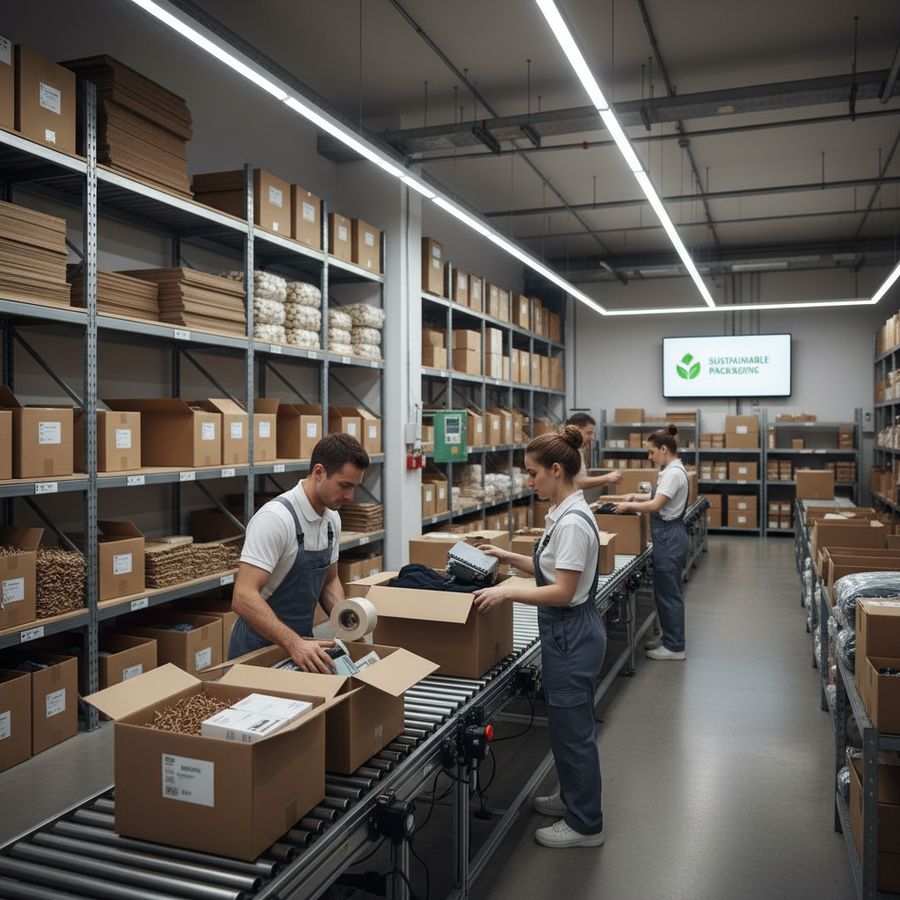
Shipping costs are highly influenced by both volume and weight, often referred to as dimensional weight. Carriers calculate the cost based on the greater of the actual weight and the volumetric weight, making smart packing crucial to minimize space and weight in each shipment.
If packages are too large in relation to their weight, the company may end up paying more than necessary. This is especially common when packaging is not adapted to the product or when there is a lot of air in the box. By using recycled cardboard as void fill, one can effectively fill empty spaces and protect the product without adding unnecessary weight.
Understanding the impact of dimensional weight is key to optimizing shipping costs. Companies that handle their packages with this in mind can save significant sums monthly while reducing the environmental impact of transport.
The right void fill material from recycled cardboard per product
All products require different types of protection during transport, and the choice of void fill material is crucial to ensure both product safety and cost-effectiveness. Recycled cardboard can be converted into several variants of void fill material, such as well-chip, well-strips, and well-net, all with different properties adapted to the product's needs.
Well-chip is ideal for filling large empty spaces and protecting fragile goods by creating a shock-absorbing layer around the product. Well-strips work excellently for stabilizing and holding products in place inside the box, while well-net provides flexible and strong protection for uneven or sensitive surfaces.
By choosing the right void fill material from recycled cardboard, you can pack smarter and at the same time use environmentally friendly resources that reduce the need for newly produced materials and lower both shipping and material costs.
Pack smarter: less air in the box
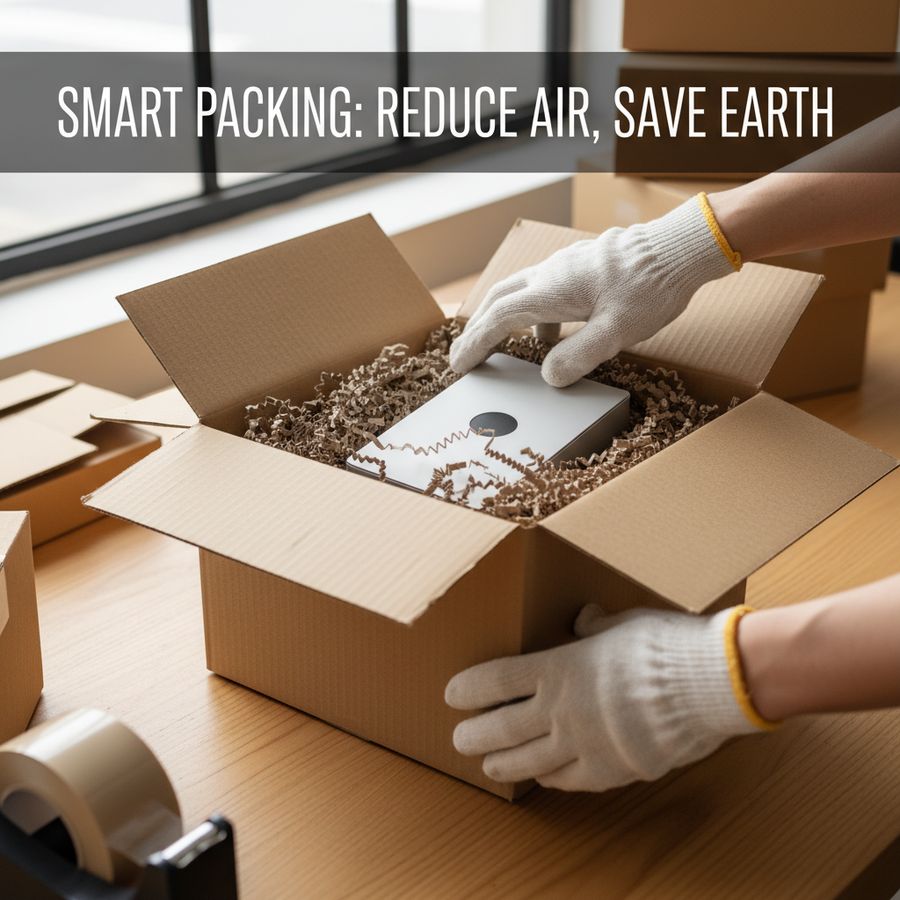
One of the most common reasons for high shipping costs is that packages contain too much air, which means unnecessarily large volume content and thus higher dimensional weight. By packing smart and minimizing the air space in the box, you can reduce the dimensional weight and thus significantly lower shipping costs.
Recycled cardboard as void fill is ideal for effectively filling these empty spaces because it is lightweight, shock-absorbing, and moldable. This keeps products safe without oversizing the package.
“Less air in the package means lower dimensional weight – and thus cheaper shipping.”
Investing in machines that convert your used cardboard boxes into void fill material is a smart way to always have access to the right amount and type of packaging, contributing to more sustainable and cost-effective shipping management.
Standardize package sizes with reused cardboard
Standardizing package sizes is another key strategy for reducing shipping costs. By using recycled cardboard to create packages with consistent and optimized dimensions, companies can avoid unnecessarily large or irregular packages that increase dimensional weight and thus shipping costs.
Standardized packages also make it easier to plan logistics and inventory management, leading to faster and more cost-effective processes. Using reused cardboard as the basis for these packages also strengthens the company's environmental profile.
With the right equipment, one can easily process and adapt corrugated cardboard to fit different product sizes within the same standard dimensions, maximizing space utilization and minimizing waste.
Calculate savings per shipment and month
To clearly see the effect of reducing shipping costs with recycled cardboard, it is important to calculate the savings per shipment and month. This is done by analyzing the difference in shipping costs before and after the implementation of smart packing and the use of recycled void fill material.
By considering factors such as reduced dimensional weight, lower material costs, and potential discounts from optimized package size, the company can create a clear financial picture. It also helps to justify the investment in machines for recycling and packing.
A clear calculation of savings makes it easier to follow up and adjust strategies to maximize both cost and environmental benefits over time.
Common shipping mistakes that increase costs
There are several common mistakes that companies often make when packing and shipping goods, leading to unnecessarily high shipping costs. A common mistake is using boxes that are too large without filling them with the correct void fill material, which increases the dimensional weight and thus the cost.
Other mistakes include not standardizing package sizes, using heavy or unnecessary materials, and not considering dimensional weight when pricing. Additionally, a lack of training in smart packing techniques can lead to inefficient processes and an increased risk of product damage.
By avoiding these mistakes and instead using recycled cardboard as void fill, companies can both better protect their products and reduce shipping costs.
Conclusion
Using recycled cardboard to reduce shipping costs is a smart and sustainable solution that benefits both the economy and the environment. By packing smart, choosing the right void fill material, and standardizing package sizes, companies can effectively reduce dimensional weight and thereby their shipping costs. For more information, please visit Reppap.
Recycling and reusing corrugated cardboard creates a circular economy where waste is transformed into valuable resources. This contributes to reduced CO₂ emissions and lowers the need for newly produced materials.
“With the right strategy and tools, recycled cardboard can be the key to both lower shipping costs and a more sustainable future.”
Invest in smart machines and routines to convert your packaging waste into effective void fill material – for the sake of business, the environment, and the future.
0 comments