

Overview
Packing parcels with the right padding is crucial for ensuring protection during shipping. In a world where products are transported long distances and through many stages, it's essential to choose the right materials for shock absorption and to fill empty spaces in cardboard boxes. By using the correct padding, the risk of damage is significantly reduced, saving both time and money.
Modern packaging solutions have evolved not only to protect products but also to be environmentally friendly. An example is ReppaP®'s WELL-CHIPs, which offer 100% recyclable and sustainable void fill materials. These are made from recycled cardboard and have a minimal CO₂ impact, making them a smart and green choice.
“Fill your packages – not your CO₂ account.”
By understanding when and how padding should be used, businesses and individuals can improve their packing and contribute to a more sustainable shipping chain.

When is padding and shock absorption needed?
Padding and shock absorption are necessary when products are sensitive to shocks and vibrations during transport. Especially when shipping fragile goods like glass, electronics, and cosmetics, proper protection is crucial to prevent damage. Even heavy and irregularly shaped products may need extra void fill material to be stabilized in the box.
It's important to identify when there are empty spaces in the packaging, as these can allow for movement which in turn can lead to product damage. Shock-absorbing materials act as a buffer, absorbing impacts and vibrations.
-
When packing fragile goods
-
To fill empty spaces in the package
-
When the transport route is long or bumpy
-
If the product is heavy or irregularly shaped
Correct padding is key to ensuring that the goods arrive undamaged.
Choose padding based on weight and product
The choice of padding should always be adapted to the weight and sensitivity of the products. Light products often require softer and more flexible void fill materials, while heavier goods need more stable and shock-absorbing solutions. WELL-CHIPs are an example of an environmentally friendly void fill material that can be adapted to different needs, with its flexible structure providing good protection without being too heavy.
It's also important to consider the products' shape and surface. Fragile items with delicate edges and surfaces should be surrounded by extra protective material, while more robust products can manage with simpler padding. Combining different materials can sometimes yield the best results, for example, by using corrugated cardboard together with shock-absorbing void fill material.
“Adapt the packing to the product's weight and sensitivity for best protection.”
By making a conscious choice of padding, both protection and cost-effectiveness can be optimized.
Pack glass, electronics, and cosmetics safely
Fragile products such as glass, electronics, and cosmetics require special care when packing. Glass must be protected from shocks and vibrations with soft and stable void fill materials. The use of WELL-CHIPs or other environmentally friendly padding provides effective protection that is also easy to handle and recycle.
Electronic products are often sensitive to shocks and static electricity. Here, it is important to use both shock-absorbing and anti-static materials to protect the internal electronics. Cosmetic products are often in glass or plastic packaging that can easily crack or leak, making proper void fill and stabilization extra important.
-
Use soft padding around glass and fragile parts
-
Fill empty spaces carefully to prevent movement
-
Choose anti-static materials for electronics
-
Ensure cosmetics are properly stabilized
By combining the right materials and packing techniques, products are ensured to reach the customer in perfect condition.
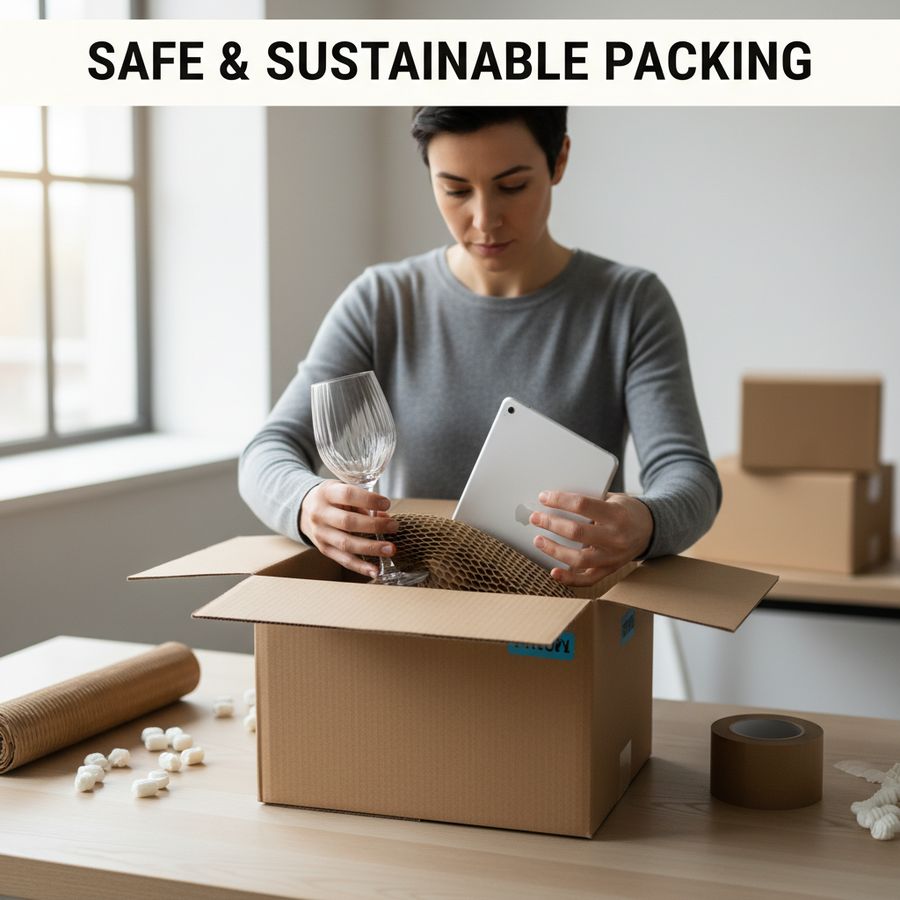
Fill empty spaces to prevent movement
Filling empty spaces in the package is a fundamental principle for protecting products during transport. Empty spaces create room for goods to move, which increases the risk of damage. By using void fill materials like WELL-CHIPs, these spaces can be easily filled and the contents stabilized.
It's important to distribute the void fill material evenly around the products so that they stay in place and don't hit each other or the box's walls. Filling empty spaces also helps the package maintain its shape and integrity throughout the entire transport chain.
“Fill the void – protect the contents.”
Correctly used padding reduces the risk of damage, complaints, and unnecessary costs while improving the customer experience.
Combine inner and outer packaging smartly
Effective packing isn't just about padding but also about cleverly combining inner and outer packaging. Inner packaging directly protects the product, while outer packaging provides robust protection against external impact. By using the right combination, protection can be optimized while also reducing material consumption.
A common strategy is to first wrap the product with shock-absorbing material like WELL-CHIPs, followed by a stable outer corrugated cardboard packaging. It's also important to choose a cardboard box that is sized for the product and its void fill material to avoid excess space.
-
Use inner packaging that conforms to the product
-
Choose outer packaging with the right strength and size
-
Combine different materials for maximum shock absorption
-
Make sure to fill all empty spaces between inner and outer packaging
With a well-thought-out packaging solution, the risk of damage and transport problems is reduced.
Conclusion
The right padding and void fill materials are crucial for ensuring protection during shipping and preventing product damage. By adapting the choice of material to the product's weight, shape, and sensitivity, effective and sustainable packaging solutions are created. ReppaP®'s WELL-CHIPs offer an environmentally friendly and smart solution for shock absorption and void fill that contributes to both protection and sustainability. Explore more about these innovative alternatives here.
By filling empty spaces and cleverly combining inner and outer packaging, you can optimize protection during transport. This saves money, reduces environmental impact, and enhances customer satisfaction.
“Fill your packages – not your CO₂ account.”
Invest in the right packing to give your products the protection they deserve and contribute to a more sustainable shipping industry.
0 comments