

Overview
Climate-neutral packaging void fill has become an increasingly important aspect of sustainable logistics and e-commerce. As demands from businesses and consumers for environmental responsibility grow, so does the need for smart and eco-friendly packaging solutions. Packaging void fill plays a crucial role in protecting products during transport, but traditional materials like plastic often contribute to high CO2 emissions and environmental problems.
This article explores why it is important to choose climate-neutral packaging void fills, what benefits it brings for both companies and the environment, and how different materials affect a product's CO2 footprint. We also look at the availability of eco-friendly alternatives and how delivery and economic aspects play a role in the decision to switch to sustainable packaging solutions.
Climate-neutral packaging void fill is an innovative solution that combines reuse, recycling, and environmentally conscious production. By choosing such products, companies can reduce their climate impact and strengthen their sustainability efforts in a tangible way. In this context, WELL-CHIP:s from ReppaP® is an example of a product that offers a strong, protective, and eco-friendly void fill solution with virtually zero CO2 impact.
With increasing demands for transparency and sustainability reporting, it is also important to understand how different packaging materials affect a company's total environmental profile and how this can be communicated to customers and stakeholders. Choosing climate-neutral void fill materials is therefore not only good for the planet – it is also a smart business strategy.
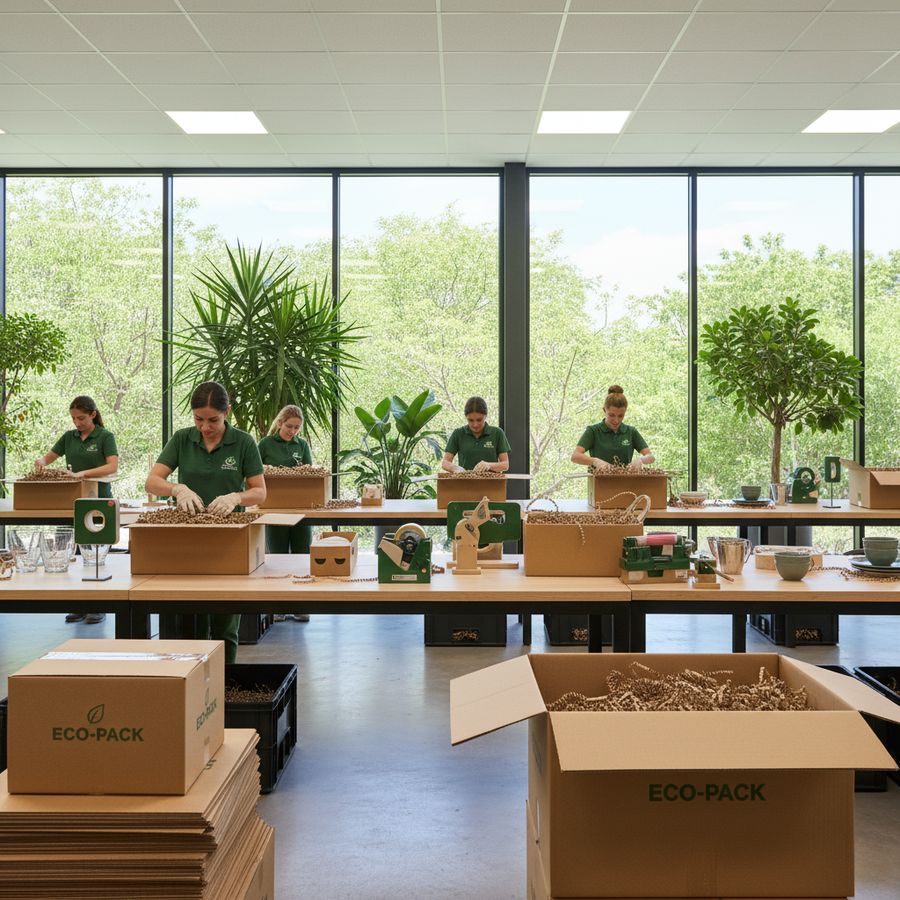
Climate Neutrality Explained
Climate-neutral packaging void fill means that the product does not contribute any net increase in greenhouse gases, especially carbon dioxide (CO2), to the atmosphere throughout its entire life cycle. This includes production, transport, use, and final disposal. A climate-neutral product can be achieved by using recycled materials, efficient manufacturing, and short transport routes, as well as ensuring that the product can be recycled or reused.
WELL-CHIP:s from ReppaP® are made from recycled cardboard, which means the material has already had a previous life cycle and gets an extended lifespan by being reused as void fill material. This reduces the need for new production and the associated emissions. Since production has a CO2 contribution of 0, this is an excellent example of a product that lives up to the principle of climate neutrality.
“Choosing climate-neutral packaging solutions is about taking responsibility for the entire value chain and minimizing environmental impact from start to finish.”
Climate neutrality is not only a technical issue but also part of a larger sustainability strategy. It means that companies need to analyze and reduce their climate impact at several levels, from raw material to end customer, and choose solutions that support a circular economy.
By using products like WELL-CHIP:s, which are 100% recyclable and manufactured in Sweden with short transport routes, it is ensured that the environmental impact is kept to a minimum. It also helps promote local jobs and social inclusion, which are important aspects of sustainable development.
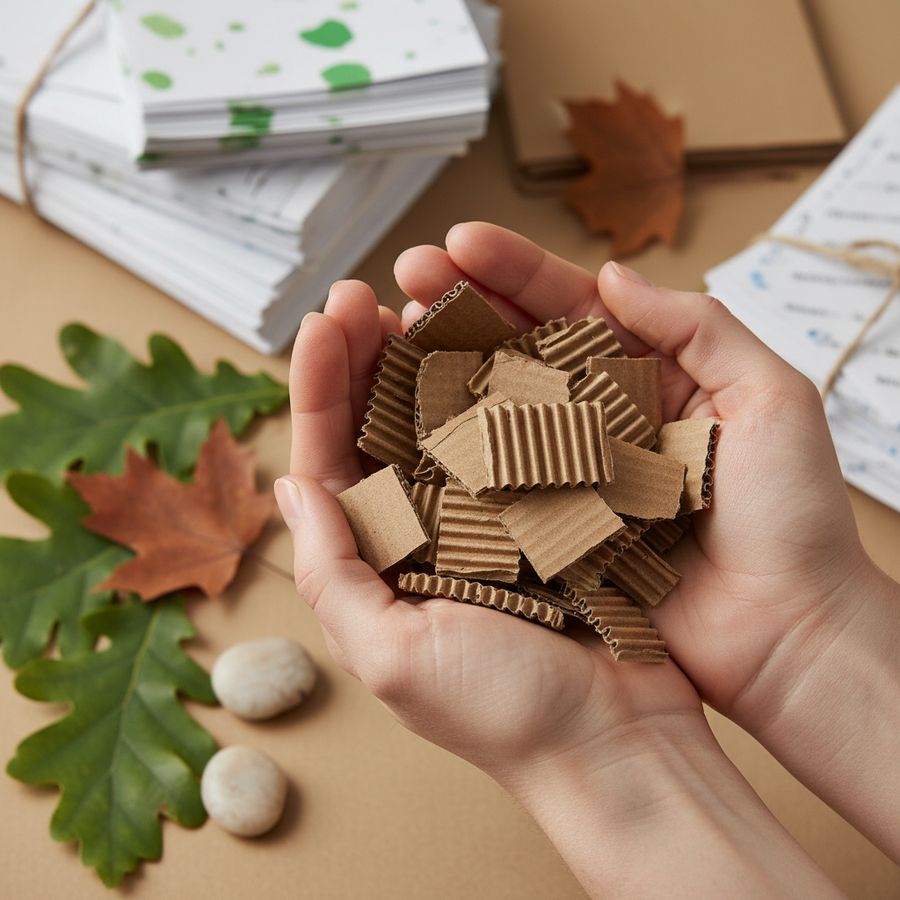
Benefits for Companies and the Environment
Choosing climate-neutral packaging void fill brings several significant benefits for both the company and the environment. Firstly, it contributes to a substantial reduction in the company's total CO2 footprint. By using recycled and reused materials, such as WELL-CHIP:s from ReppaP®, companies can save up to 30% in CO2 emissions compared to traditional plastic void fill.
For businesses, this means an opportunity to strengthen their sustainability profile and meet the increasing demands from both customers and authorities. Sustainability is now a competitive advantage and can lead to increased customer loyalty, improved brand reputation, and new business opportunities. Additionally, companies can benefit from cost savings through efficient procurement and reduced waste management costs.
- Reduced environmental impact: Recycled materials and low emissions minimize climate impact.
- Improved brand image: Eco-friendly choices strengthen customer trust.
- Economic gains: Price guarantee and reduced waste costs.
- Social responsibility: Collaborations with marginalized groups in the labor market promote inclusion.
From an environmental perspective, climate-neutral packaging void fill helps reduce plastic use, which is a major source of pollution in nature. Furthermore, this type of solution supports a circular economy where materials are reused and recycled in multiple stages, conserving resources and reducing waste volumes.
In summary, climate-neutral packaging void fill is a win-win solution that combines sustainability, economy, and social responsibility – something that more and more companies realize is crucial for the future.
Comparison of Product CO2 Footprints
An important aspect when choosing packaging void fill is to understand and compare the CO2 footprint of different materials. Traditional void fill materials like plastic foam and air pillows often have high emissions during production and waste disposal, while eco-friendly alternatives like WELL-CHIP:s, made from recycled cardboard, have a significantly lower climate impact.
Studies show that WELL-CHIP:s can have up to 30% lower CO2 emissions than plastic void fill. This is due to several factors, including the fact that the cardboard is recycled, production takes place in Sweden with short transport routes, and the product has virtually zero CO2 contribution during its life cycle.
“94% of the material in WELL-CHIP:s is recycled paper, which significantly reduces emissions compared to newly produced materials.”
Considering the entire product life cycle is crucial for a fair comparison. Plastic void fill often requires fossil raw materials, energy-intensive production, and contributes to microplastic problems during degradation. Cardboard-based void fills, on the other hand, can be easily recycled and converted into new products, closing the loop.
Companies wishing to reduce their climate impact should therefore carefully evaluate material choices and opt for solutions with a documented low CO2 footprint. WELL-CHIP:s from ReppaP® is an example of how to combine practical function with environmental benefits and social responsibility.
Availability and Delivery
One of the important factors for successful transition to climate-neutral packaging void fill is that products are easily accessible and can be delivered quickly and reliably. ReppaP® offers daily delivery to companies throughout Sweden, making it easy to integrate WELL-CHIP:s into existing logistics flows without interruption.
With a well-functioning supply chain, companies can ensure their inventories are up to date and meet customer demand without unnecessary delays. Price guarantees for bulk purchases and flexible agreements also make it economically attractive to switch to eco-friendly void fill materials.
- Daily delivery throughout Sweden – fast and secure distribution.
- Price guarantee – competitive prices even for large volumes.
- Flexible agreements – customized solutions for fixed or variable needs.
- Local production – short transport routes reduce environmental impact.
Local production in Sweden is a major environmental advantage, as it reduces transport-related emissions and contributes to a stable supply chain. It also allows for quick adaptation of production to customer needs and demand.
In summary, accessibility and efficient delivery make it easy for companies to choose climate-neutral packaging void fill without compromising on quality or service.
Economic Aspects
It is common for companies to worry about costs when transitioning to eco-friendly packaging solutions. However, climate-neutral packaging void fill can often be both cheaper and more cost-effective in the long run. WELL-CHIP:s from ReppaP® offer a price guarantee for bulk purchases, making it possible to match or even reduce costs compared to existing plastic-based solutions.
By reducing the need for new production and at the same time optimizing logistics, the total cost of packaging materials and freight also decreases. Additionally, companies can save on waste management and environmental taxes, as recyclable materials often result in lower waste management costs than plastic.
“With ReppaP®, we save both money and CO₂ - and customers love it.” - Warehouse Manager, E-commerce
Investing in eco-friendly packaging void fill also strengthens the company's position in a market where sustainability is becoming increasingly important for consumers. This can lead to increased revenue and better business relationships. Furthermore, collaboration with ReppaP® contributes to social sustainability by creating job opportunities for people with disabilities.
Including both direct and indirect economic benefits provides a more comprehensive picture of the value in choosing climate-neutral void fill materials. It is an investment in future sustainability and competitiveness.
Conclusion
Choosing climate-neutral packaging void fill is a wise and responsible choice for companies that want to reduce their climate impact and strengthen their sustainability efforts. By using recycled cardboard like WELL-CHIP:s from ReppaP®, products can be effectively protected while contributing to a circular economy and reduced CO2 emissions.
The benefits are many: lower climate impact, economic savings, improved brand image, and social responsibility. With daily delivery and a price guarantee, it is also a practical and cost-effective solution.
Climate-neutral packaging void fill is more than just a product – it is a sustainable strategy for the future. To take the next step towards a more sustainable business, visit ReppaP.
“Fill your packages – not your CO₂ account.”
0 comments