

Overview
Corrugated cardboard as packaging filler has become an increasingly popular choice in logistics and e-commerce due to its environmentally friendly properties and efficiency. Corrugated cardboard, a material consisting of multi-layered board with a fluted core, is often used to protect fragile products during transport. When reused as packaging filler, it not only contributes to better protection but also to a more sustainable use of resources.
The filling material works by enclosing and supporting goods in the box, which reduces the risk of damage from shocks and vibrations. Traditionally, plastic-based solutions have been common, but with increasing awareness of environmental impact, corrugated cardboard has become a preferred alternative. It is lightweight, recyclable, and can be made from recycled materials, helping to reduce waste and CO2 emissions.
An important aspect of corrugated cardboard filler is its flexibility – it can be adapted into various shapes and sizes to suit your specific products and packaging needs. Furthermore, it is easy for end-users to recycle corrugated cardboard, making it a circular and sustainable choice for companies looking to reduce their environmental impact without compromising on quality and protection.
"Choosing corrugated cardboard as packaging filler is not just smart for product protection, it's also a step towards a greener and more sustainable future."
In summary, corrugated cardboard is a cost-effective, environmentally friendly, and practical solution that more and more companies in warehousing and e-commerce are using to improve their packaging processes. By choosing recycled cardboard as packaging filler, one can reduce both waste and climate impact, which is a win-win for both business and the environment.
Why corrugated cardboard provides good shock absorption
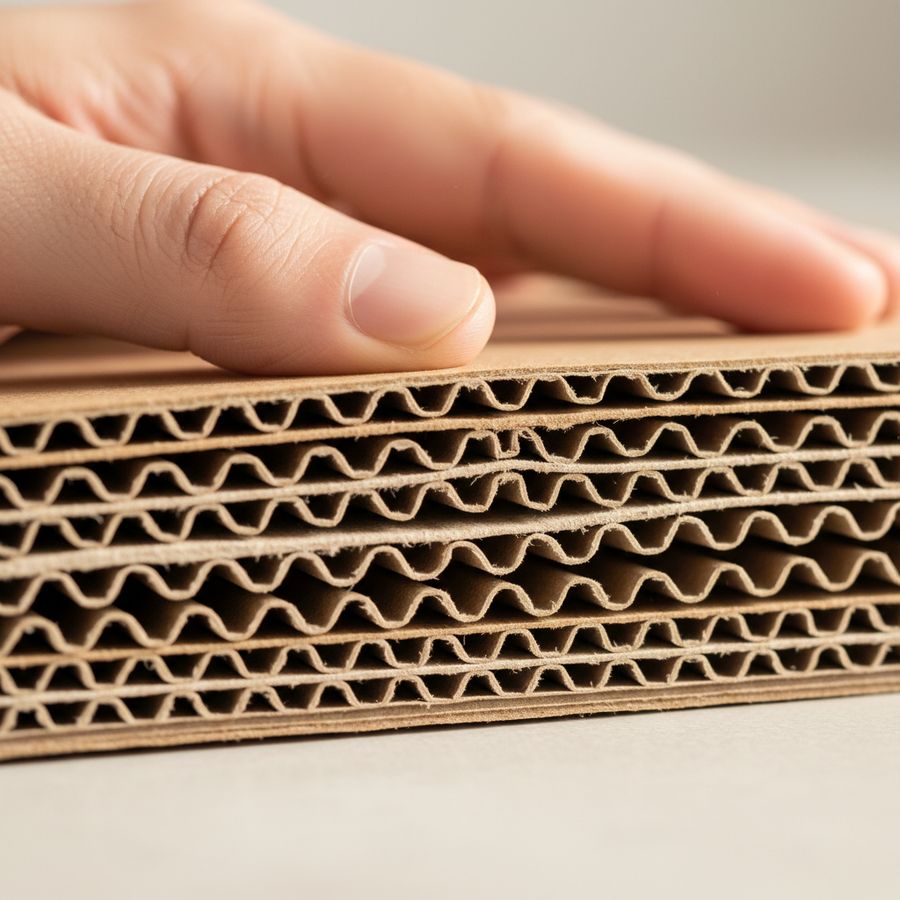
Corrugated cardboard has unique properties that make it an excellent material for shock absorption. The wavy middle layer of the corrugated cardboard acts as a resilient barrier that absorbs and distributes shocks and pressure evenly across the surface. This reduces the risk of damage to sensitive products during transport and handling.
The material's structure also makes it light yet strong, providing effective protection without increasing the weight of the package. The flexible nature of corrugated cardboard allows it to adapt to different product sizes and shapes, providing custom protection that minimizes movement inside the box.
Another advantage is that corrugated cardboard used as packaging filler is often made from recycled cardboard, which not only contributes to environmental friendliness but also gives the material a robust and durable character. This means that corrugated cardboard can be reused several times without losing its shock-absorbing properties.
-
Effective shock absorption: The corrugated structure of the cardboard acts as a natural shock absorber.
-
Lightweight: Reduces shipping costs while maintaining product protection.
-
Flexibility: Adapts to the product's shape and size for optimal protection.
-
Environmentally friendly: Made from recycled cardboard with low environmental impact.
"Corrugated cardboard's unique design combines protection with sustainability – a perfect combination for modern packaging solutions."
In summary, corrugated cardboard is an ideal packaging filler for companies that prioritize product safety and environmental considerations. Its shock-absorbing effect ensures that products reach the end customer in perfect condition, reducing returns and increasing customer satisfaction.
Recycled cardboard and the circular economy
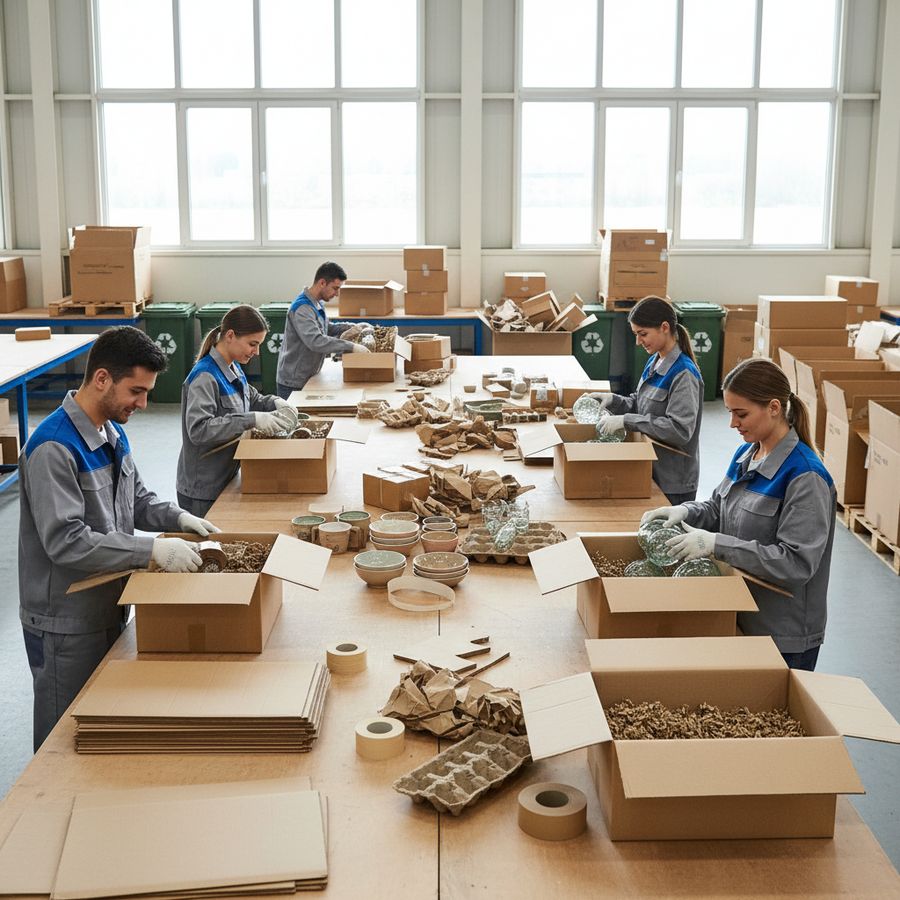
Recycled cardboard is a central component of a circular economy and plays a crucial role in sustainable packaging solutions. By using corrugated cardboard that has already served a life as packaging, the material's life cycle is significantly extended. This reduces the need for new production and, consequently, resource consumption and CO2 emissions.
The principle of the circular economy is to minimize waste and maximize the reuse of materials. Corrugated cardboard as packaging filler is a clear example of this, where waste from one process becomes raw material in another. This means that the cardboard is not only recycled but also reused in its existing form, saving energy and minimizing environmental impact.
Companies that choose recycled cardboard as packaging material actively contribute to a sustainable society by:
-
Reducing the amount of waste going to landfill or incineration.
-
Conserving natural resources through reduced demand for virgin paper.
-
Lowering CO2 emissions through reduced production and transport.
-
Strengthening their sustainability profile with customers and partners.
"Using recycled cardboard is not just environmentally smart – it's a strategic investment in the future and the circular economy."
With well-established collection and recycling systems, corrugated cardboard can be easily sorted and reused, making it one of the most environmentally friendly packaging fillers on the market. It is also a product often produced locally, further reducing its environmental footprint.
Comparison: corrugated cardboard filler vs plastic chips
When it comes to packaging filler, the choice between corrugated cardboard and plastic chips is an important question for both environment and functionality. Both materials are used to protect products during transport, but their properties and environmental impact differ significantly.
Plastic chips are lightweight and have good shock-absorbing properties, but they are often made from fossil-based raw materials and are difficult to recycle in practice. They contribute to plastic pollution and have a significant CO2 impact from production to waste management.
Corrugated cardboard filler, on the other hand, is made from 100% recycled cardboard and can be recycled or composted after use. Its manufacturing requires less energy and results in up to 30% lower CO2 emissions compared to plastic-based filling materials. Furthermore, corrugated cardboard is biodegradable and leaves minimal environmental waste.
-
Environmental impact: Corrugated cardboard has significantly lower CO2 emissions than plastic chips.
-
Recycling: Corrugated cardboard is easier to recycle and is included in existing recycling systems.
-
Product protection: Both provide good shock absorption, but corrugated cardboard is more adaptable.
-
Cost: Corrugated cardboard can be cost-effective due to local production and price guarantee for larger volumes.
"The choice of packaging filler affects not only product safety but also the company's environmental footprint and sustainability profile."
In summary, corrugated cardboard filler is a more sustainable and environmentally friendly alternative to plastic chips, without compromising on protection. It is a natural step for companies looking to optimize their packaging solutions with a focus on environment and economy.
How material choices affect CO2 and waste
The choice of material for packaging filler has a direct and significant impact on both CO2 emissions and the amount of waste generated. Corrugated cardboard as packaging filler is particularly advantageous from this perspective because it is made from recycled cardboard and has almost zero CO2 contribution in the production stage.
By using corrugated cardboard, companies reduce the need for virgin raw materials, which saves energy and reduces emissions from both forestry and paper manufacturing. In addition, the short transport distance with local production further contributes to reduced emissions.
Waste volume is also reduced because corrugated cardboard can be discarded directly into cardboard recycling and thus returned to the cycle. This creates an efficient circular process where waste from one operation becomes raw material in another, significantly reducing environmental impact.
-
CO2 reduction: Up to 30% lower emissions compared to plastic-based alternatives.
-
Waste management: 100% recyclable and biodegradable material.
-
Local production: Shorter transport routes further reduce climate impact.
-
Life cycle perspective: Reuse of cardboard extends the material's life cycle and reduces the need for new production.
"A conscious material choice in packaging is crucial for reducing climate impact and creating a sustainable future."
Companies that prioritize environmentally friendly material choices can therefore not only reduce their climate impact but also strengthen their brand and meet increasingly strict sustainability requirements from both consumers and legislators.
Best areas of use in warehousing and e-commerce
Corrugated cardboard as packaging filler is particularly suitable for warehouse and e-commerce environments where efficiency, product protection, and environmental considerations are prioritized. Its flexibility and shock-absorbing properties make it ideal for protecting everything from sensitive electronics to glass and ceramics during shipping.
In warehouses, corrugated cardboard filler is often used to fill empty spaces in boxes, preventing movement and damage during handling and transport. For e-commerce, it is an affordable and environmentally friendly option that strengthens the company's sustainability profile while ensuring that customers receive their products in perfect condition.
Corrugated cardboard is also easy to handle and dispense automatically in packing stations, which increases the efficiency of the packing process. Furthermore, it is easy for customers to sort and recycle, which improves the customer experience and reduces waste volumes.
-
Sensitive products: Electronics, glass, porcelain, and similar items are effectively protected.
-
Automated packing lines: Suitable for use in machine packing and filling.
-
Environmental profile: Contributes to sustainability goals and strengthens the brand.
-
Cost-effective: Price guarantee and local production reduce costs.
"With corrugated cardboard as packaging filler, warehouses and e-commerce can protect both their products and the environment – without compromise."
In summary, corrugated cardboard is an optimal solution for companies that want to combine function, environmental awareness, and cost-effectiveness in their packaging routines within warehousing and e-commerce.
Conclusion
Corrugated cardboard as packaging filler offers a modern and sustainable solution for companies in warehousing, logistics, and e-commerce. By using recycled cardboard, an important step is taken towards a circular economy with reduced climate impact and lower waste volumes.
The material's unique properties, such as effective shock absorption, low weight, and adaptability, make it a safe and cost-effective packaging solution. Compared to plastic-based alternatives, corrugated cardboard has significantly lower CO2 emissions and is easy to recycle. This strengthens the company's sustainability profile and contributes to long-term environmental benefits. To learn more about how corrugated cardboard can benefit your company, visit Reppap.
With local production and social responsibility in manufacturing, where people far from the labor market are given opportunities, environmental benefits go hand in hand with social responsibility. This makes corrugated cardboard filler a choice that not only protects products but also the planet and the people behind the production.
"Choosing corrugated cardboard as packaging filler is a wise, sustainable, and future-proof decision for all companies that value quality and the environment."
For companies that want to optimize their packaging solutions while reducing their climate impact, corrugated cardboard is the natural way forward.
0 comments